Seobility alternatives: 49 SEO tools grouped by type
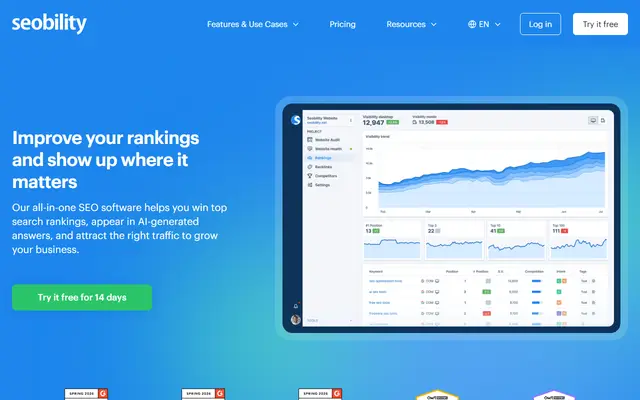
Seobility is a website-audit and SEO monitoring product at seobility.net. In the public data we use it has a Majestic rank of 19,931 and a Tranco rank of 53,857, which places it as a well-known name in the search-tools space but far from the largest. People who look for a replacement usually do so for practical reasons: they outgrew the tool, they need a different kind of report, or they want something that fits a different budget or country.
This page lists 49 alternatives compiled from public sources in November 2026. The list is organised by type rather than by popularity: direct competitors, budget-friendly tools, free options, enterprise-grade platforms, open-source and self-hosted crawlers, regional products, built-in tools, adjacent products and so on. Every entry on this page was seen in search results during our review, so none of them is flagged as unconfirmed.
Use the guides below to narrow the field. Start with the section on how to choose, skim the quick picks for your situation, then open the type guide that matches your constraints. If you want the wider picture first, the SEO tools category shows how Seobility sits next to other products, and the methodology explains where the numbers come from and what we do not check.
Seobility is available at seobility.net. Its domain ranks #19,931 in the Majestic Million, a free public list of the most-linked-to domains on the web. Its domain ranks #53,857 in the Tranco list of the most visited domains.
This page lists 49 alternatives to Seobility, spread across 9 types: direct (7), budget (4), free (2), enterprise (7), open source (5), self-hosted (1), regional (8), built-in (3), adjacent (12).
49 of the 49 entries were seen in live web search results during our November 2026 review; the remaining entries are labelled unconfirmed so you know where extra checking is needed.
Regional options cover Germany, France, Russia.
- Direct: 7 (14%)
- Budget: 4 (8%)
- Free: 2 (4%)
- Enterprise: 7 (14%)
- Open source: 5 (10%)
- Self-hosted: 1 (2%)
- Regional: 8 (16%)
- Built-in: 3 (6%)
- Adjacent: 12 (24%)
49 of 49 entries (100%) were seen in live search results during our review; the rest are labelled “unconfirmed” and should be checked on the vendor site.
Quick comparison: the closest alternatives to Seobility
| Site | Name | Type | Founded | Majestic rank | Check |
|---|---|---|---|---|---|
 | SE Ranking | Direct | 2012 | #6,339 | seen in search |
 | Moz Pro | Direct | 2004 | #848 | seen in search |
 | SEO PowerSuite | Direct | n/a | #343,262 | seen in search |
| Raven Tools | Direct | n/a | n/a | seen in search | |
 | Sitechecker | Direct | n/a | #26,049 | seen in search |
What is Seobility and why do people look for alternatives?
Seobility is an SEO product published under the domain seobility.net. Our data for this page contains only a few hard facts about it: the domain, a Majestic rank of 19,931 and a Tranco rank of 53,857. We do not state its prices, plans or feature list here, because those are not part of the public data we rely on. For the exact scope of the product, check the vendor's own site.
In general terms, tools in this family crawl a website, report technical problems, track keyword positions and give a to-do list for improving pages. That is the job most alternatives on this page also do, which is why the field is crowded and why a switch is rarely about one missing checkbox.
The reasons people start looking elsewhere tend to repeat across the whole category. Some teams need deeper backlink data than an audit-focused tool offers. Some want rank tracking for many clients with white-label reports. Others want a free or open-source crawler because the budget is fixed, or they want to keep crawl data on their own server. Agencies sometimes need a tool that speaks their clients' language and local search engine, and larger companies often need single sign-on, API access and support contracts.
Market news also pushes people to compare. Based on public sources, Adobe closed its purchase of Semrush on 28 April 2026, and the Semrush FAQ says contracts and prices had not changed at the time we looked. Surfer SEO was bought by Positive Group in October 2025, according to search results. Neither event says anything about Seobility itself, but ownership changes in the category often prompt a fresh look at what else is available. This page exists to make that comparison faster.
How we built this list of Seobility alternatives
We compiled the list from public sources in November 2026: search result pages for Seobility and for comparison queries, vendor websites, and open datasets. Rankings such as Majestic Million and Tranco give a rough idea of how widely a domain is referenced or visited. Founded years and headquarters countries come from Wikidata where it has them. Fields that were missing stay missing on the page instead of being guessed.
Each entry carries a status. Seen in search means the product appeared in our search review as a real, live offering. Unconfirmed means we could not confirm it during that review; the entry may still exist, but you should verify it before relying on it. For Seobility, all 49 alternatives were seen in search.
We group entries into types because a single ranked list hides the thing that usually matters most, which is the kind of trade-off you are making. A free crawler and an enterprise platform are not competing for the same buyer. You can read what each type means on the type pages, and the methodology page lists what we do not check, including prices, features and current availability.
How to choose a Seobility alternative
Start from the job, not the brand. Write down the two or three reports you open every week. For many teams that is a technical audit with a prioritised issue list, a rank tracker for a fixed keyword set, and a simple report to forward to a client or manager. If a candidate covers those three well, you can ignore a long list of extras.
Next, size the problem. A site with a few hundred pages can be handled by almost any crawler, including free ones such as Greenflare or SEOnaut. A site with hundreds of thousands of URLs needs a crawler built for scale, which is where the enterprise-grade names such as Botify, Lumar and seoClarity come into the picture. Matching tool weight to site size saves both money and setup time.
Then look at who will use it. A solo owner can live with a desktop crawler and a spreadsheet. A team needs shared projects, permissions and scheduled reports. An agency needs many projects and client-ready exports. The SEO tools category shows how different products split along these lines.
Finally, test with your own site. Run the same crawl in two candidates and compare what each flags. Differences in how they treat redirects, canonicals and JavaScript tell you more than any feature table. Keep the trial short and decide against criteria you wrote down in advance.
- Coverage: does it handle audits, rank tracking and reporting, or only one of them?
- Scale: how many URLs and keywords can it handle at your plan level, and how often does it refresh?
- Data source: where do backlink and keyword numbers come from, and how large is the index?
- Reporting: can you schedule, white-label and export reports in the formats your stakeholders read?
- Market fit: does it support your target country and search engine, not only Google in English?
- Control: do you need to keep crawl data on your own server, which points to open-source or self-hosted tools?
- Total cost: count seats, projects and add-ons, not just the headline price shown on a pricing page.
Quick picks by situation
If you want the closest match in scope, look at the direct group first. SE Ranking, Moz Pro and Sitechecker all cover audits and tracking, and Moz Pro has its own page here with its own list of options. For a team that wants to stay in the same weight class but pay less, Mangools and Ubersuggest are named in the budget group.
If you have no budget, begin with Google Search Console and Bing Webmaster Tools. Both come straight from the search engines and show how those engines see your site. Add a free crawler when you need a full page-by-page list of issues; SiteOne Crawler and Greenflare are in the open-source group.
If you manage many sites for clients, compare rank-tracking specialists and reporting tools. AccuRanker focuses on rank tracking, and AgencyAnalytics is listed for client dashboards. Search Atlas and SEO PowerSuite are also in the direct group.
If you need competitor and backlink research at depth, the usual choices are Semrush and Ahrefs. If you work in a content-first workflow, Surfer SEO is listed among adjacent products.
If your market is Germany, France or Russia, the regional group includes Sistrix, XOVI, Ryte, Ranxplorer, Haloscan and Topvisor. If you run WordPress and want everything inside the dashboard, Yoast SEO and Rank Math are in the built-in group.
All 49 alternatives to Seobility by type
Direct alternatives to Seobility (7)
Products that solve the same core problem for the same kind of buyer. Switching usually means moving data and retraining people, not changing how you work. For Seobility, this list contains 7 entries in this group, including SE Ranking, Moz Pro, SEO PowerSuite, Raven Tools and Sitechecker. See all direct alternatives across every product →
Choosing among direct alternatives to Seobility
The direct group holds seven products that aim at the same buyer: SE Ranking, Moz Pro, SEO PowerSuite, Raven Tools, Sitechecker, Search Atlas and PromoPilot. They combine site audits, rank tracking and some form of reporting, so you can usually replace Seobility with one of them without changing your workflow.
Public data separates them a little. SE Ranking lists a founded year of 2012 and a United Kingdom headquarters, with a Majestic rank of 6,339. Moz Pro is the oldest in the group by founded year, 2004, with a Majestic rank of 848 and a United States headquarters. Sitechecker shows a rank of 26,049 and Search Atlas 54,387. SEO PowerSuite appears at 343,262, which says little about quality, since a desktop-first product may be linked less often.
Raven Tools and PromoPilot have no public ranking data in our data, so judge them by their own sites and trials. Because the products overlap heavily, decide on pricing structure, report templates and how comfortable your team is with the interface. Read the broader direct alternatives page for how we define the type.
| Site | Name | Type | Founded | Majestic rank | Check |
|---|---|---|---|---|---|
| SE Ranking | Direct | 2012 | #6,339 | seen in search |
| Moz Pro | Direct | 2004 | #848 | seen in search |
| SEO PowerSuite | Direct | n/a | #343,262 | seen in search |
| Raven Tools | Direct | n/a | n/a | seen in search | |
| Sitechecker | Direct | n/a | #26,049 | seen in search |
 | Search Atlas | Direct | n/a | #54,387 | seen in search |
| PromoPilot | Direct | n/a | n/a | seen in search |
Budget-friendly alternatives to Seobility (4)
Lower-cost tools that cover the essential jobs without the full feature surface. A good fit when you pay for seats or features you rarely open. For Seobility, this list contains 4 entries in this group, including Mangools, Ubersuggest, Morningscore and InstaRank SEO. See all budget alternatives across every product →
Choosing among budget-friendly alternatives to Seobility
The budget group has four entries: Mangools, Ubersuggest, Morningscore and InstaRank SEO. They are included because public sources describe them as lower-cost routes into keyword research, tracking and basic audits. We do not list prices here, since prices change and are outside the data we check.
Mangools has the strongest public footprint in this group, with a Majestic rank of 10,617. The other three have no ranking data in our data, which is common for smaller products. That should not rule them out, but it means you need to check recent reviews, support responsiveness and the update history on the vendor's site.
A budget tool makes sense when your needs are narrow. If you check rankings for a few dozen keywords and run an audit once a month, you do not need an agency platform. It makes less sense when you have many client sites, need long data history or require an API. Compare the limits on projects, keywords and crawled pages, not only the monthly figure. For other cost-conscious paths see the budget-friendly type page and the free options.
Free options to Seobility (2)
Tools with a free plan or free access that is usable on its own. Limits on volume, users or history usually apply, so check them before you commit. For Seobility, this list contains 2 entries in this group, including Ahrefs Webmaster Tools and Bing Webmaster Tools. See all free alternatives across every product →
Choosing among free alternatives to Seobility
Two free options appear in the data: Ahrefs Webmaster Tools and Bing Webmaster Tools. Ahrefs Webmaster Tools comes from a vendor with a founded year of 2010, a Singapore headquarters and a Majestic rank of 823. Bing Webmaster Tools comes from a search engine, with a founded year of 2009 and a Majestic rank of 117.
Both fit site owners who verify their own domain. They give you data about your own site, not a view of competitors, and that is the main limit of the free group. If you need to study other sites, you will end up with a paid tool or a mix of tools.
Because the group is small, it helps to widen the search. Google Search Console sits in the built-in group on this page, and the open-source crawlers cover technical audits without a licence fee. A common free stack is Search Console for search data, Bing Webmaster Tools for the second engine, Ahrefs Webmaster Tools for backlink and audit data, and a free crawler for deep technical checks. See the free type page for how we define free, which includes free tiers and not only products with no paid plan.
| Site | Name | Type | Founded | Majestic rank | Check |
|---|---|---|---|---|---|
 | Ahrefs Webmaster Tools | Free | 2010 | #823 | seen in search |
 | Bing Webmaster Tools | Free | n/a | n/a | seen in search |
Enterprise-grade alternatives to Seobility (7)
Platforms built for large teams: governance, audit trails, integrations and support contracts. They tend to cost more and take longer to roll out. For Seobility, this list contains 7 entries in this group, including Semrush, Ahrefs, BrightEdge, Conductor and seoClarity. See all enterprise alternatives across every product →
Choosing among enterprise-grade alternatives to Seobility
Seven platforms sit in the enterprise-grade group: Semrush, Ahrefs, BrightEdge, Conductor, seoClarity, Botify and Lumar. They target large sites, big teams and organisations that need contracts, support and integrations.
Semrush (founded 2008, United States, Majestic rank 653) and Ahrefs (founded 2010, Singapore, rank 823) are the best known and have their own pages: Semrush alternatives and Ahrefs alternatives. BrightEdge has a page too, with a Majestic rank of 10,546. Conductor lists 2006 as its founded year, a United States headquarters and a rank of 7,967. seoClarity shows 40,061, Botify 59,469 and Lumar 51,140.
Botify and Lumar are strongest associated with large-scale crawling and technical monitoring, according to how they are described in search results. Pick an enterprise tool when you can name the capability you lack today, such as log-file analysis, multi-brand reporting or role-based access. Otherwise you may pay for features nobody opens. Our enterprise-grade type page explains the usual trade-offs.
| Site | Name | Type | Founded | Majestic rank | Check |
|---|---|---|---|---|---|
 | Semrush | Enterprise | 2008 | #653 | seen in search |
| Ahrefs | Enterprise | 2010 | #823 | seen in search |
 | BrightEdge | Enterprise | n/a | #10,546 | seen in search |
 | Conductor | Enterprise | 2006 | #7,967 | seen in search |
 | seoClarity | Enterprise | n/a | #40,061 | seen in search |
 | Botify | Enterprise | n/a | #59,469 | seen in search |
 | Lumar | Enterprise | n/a | #51,140 | seen in search |
Open-source alternatives to Seobility (5)
Projects whose source code is public. You can inspect, modify and often self-host them, at the price of doing more of the maintenance yourself. For Seobility, this list contains 5 entries in this group, including SiteOne Crawler (MIT), Scrawly (MIT), SEOnaut, Greenflare and OpenSEO. See all open source alternatives across every product →
Choosing among open-source alternatives to Seobility
Five open-source projects are listed: SiteOne Crawler (MIT), Scrawly (MIT), SEOnaut, Greenflare and OpenSEO. They are crawlers and audit tools whose code you can inspect and run yourself, usually without a subscription.
The trade-off is effort. Open-source tools rarely include a hosted backlink index or a shared reporting portal, so they replace the audit part of Seobility rather than the whole product. You also carry the maintenance: updates, installation and any fixes if a release changes behaviour.
Choose this route when you have a technical person on the team, a privacy requirement that keeps crawl data in-house, or a very large number of small sites where per-project pricing hurts. Before committing, check the repository for recent commits, open issues and the licence text. Projects differ widely in how actively they are maintained, and we do not rank them on that. A sensible approach is to run two of them against the same site and compare the issue lists. See the open-source type page for more on evaluating this group.
| Site | Name | Type | Founded | Majestic rank | Check |
|---|---|---|---|---|---|
| SiteOne Crawler (MIT) | Open source | n/a | n/a | seen in search | |
| Scrawly (MIT) | Open source | n/a | n/a | seen in search | |
| SEOnaut | Open source | n/a | n/a | seen in search | |
| Greenflare | Open source | n/a | n/a | seen in search | |
| OpenSEO | Open source | n/a | n/a | seen in search |
Self-hosted alternatives to Seobility (1)
Software you run on your own server or computer. You keep control of the data and the uptime, and you take on updates, backups and security. For Seobility, this list contains 1 entry in this group, including LibreCrawl. See all self-hosted alternatives across every product →
Choosing among self-hosted alternatives to Seobility
The self-hosted group has one entry in our data: LibreCrawl. Self-hosted means you run the software on infrastructure you control, which may be a small virtual server or a machine in your office, instead of using a vendor's cloud.
With a group this small, the practical advice is to treat LibreCrawl as one candidate and read the open-source entries alongside it, because many of them can also be run on your own server. SEOnaut and SiteOne Crawler, for example, are listed as open-source, and you can place them on your own hardware as well.
Self-hosting makes sense if you need control over where crawl data is stored, want to avoid per-seat pricing, or need to schedule very frequent crawls without usage caps. It makes less sense if nobody on your team wants to handle updates, backups and uptime. Ask who owns the server in six months. If the answer is unclear, a hosted product may be cheaper once you count the time. The self-hosted type page lists what to check before you commit, including licence, update cadence and the effort needed to move data out later.
| Site | Name | Type | Founded | Majestic rank | Check |
|---|---|---|---|---|---|
| LibreCrawl | Self-hosted | n/a | n/a | seen in search |
Regional and local alternatives to Seobility (8)
Vendors that are strongest in a particular country or region: local languages, local payment methods, local data-residency rules and local support hours. For Seobility, this list contains 8 entries in this group, including Sistrix, XOVI, Ryte, Ranxplorer and Haloscan. See all regional alternatives across every product →
Choosing among regional alternatives to Seobility
Eight regional products are listed: Sistrix, XOVI and Ryte from Germany, Ranxplorer and Haloscan from France, and Topvisor, MegaIndex and Serphunt from Russia. Regional tools are built around a specific market, so they often handle local search engines, languages and data sources better than global products.
Public data shows Sistrix with a Germany headquarters and a Majestic rank of 44,381, Ryte with 24,714 and Topvisor with 157,548. XOVI, Ranxplorer, Haloscan, MegaIndex and Serphunt have no ranking data in our data.
A regional pick helps when your customers are in that market, when your reports need to be in the local language or when you track local engines. It helps less if you manage global sites and need one view across countries; there a global platform is usually simpler. Be aware that availability, payment methods and support hours can differ by country, and we do not check them. Our regional type page explains how we assign a country to a product. Remember that a product's country in our data comes from public sources and may not reflect where its customers are.
| Site | Name | Type | Founded | Majestic rank | Check |
|---|---|---|---|---|---|
 | Sistrix | Regional · Germany | n/a | #44,381 | seen in search |
| XOVI | Regional · Germany | n/a | n/a | seen in search | |
 | Ryte | Regional · Germany | n/a | #24,714 | seen in search |
| Ranxplorer | Regional · France | n/a | n/a | seen in search | |
| Haloscan | Regional · France | n/a | n/a | seen in search | |
 | Topvisor | Regional · Russia | n/a | #157,548 | seen in search |
| MegaIndex | Regional · Russia | n/a | n/a | seen in search | |
| Serphunt | Regional · Russia | n/a | n/a | seen in search |
Built-in features of platforms you already use to Seobility (3)
Capabilities that already ship inside a suite or platform you pay for. They rarely match a specialist tool feature for feature, but they cost nothing extra. For Seobility, this list contains 3 entries in this group, including Google Search Console, Rank Math and Yoast SEO. See all built-in alternatives across every product →
Choosing among built-in alternatives to Seobility
Three built-in options appear: Google Search Console, Rank Math and Yoast SEO. Built-in means the capability comes bundled with something you already use, either a search engine's console or a plugin that lives inside your content management system.
Google Search Console has a Majestic rank of 227 and shows how Google reports on your site. Yoast SEO lists a founded year of 2010, a Netherlands headquarters and a rank of 2,062. Rank Math sits at 6,776. The two plugins work inside WordPress, where they help with on-page checks while you write and publish.
These tools do not replace a crawler or a competitor database. They are strongest as a first layer: they catch missing titles, thin pages and indexing problems early, with no extra login. If your site is small and mostly content, they may be enough for months. As the site grows, add a crawler or a tracker. Because they cost little to try, enable them before you commit to a larger purchase and see which gaps are left. The built-in type page covers similar options across other categories.
Adjacent tools to Seobility (12)
Products that cover part of the job or approach it from another angle. Useful when you only need a slice of the original product. For Seobility, this list contains 12 entries in this group, including Screaming Frog SEO Spider, Sitebulb, Netpeak Spider, Xenu's Link Sleuth and AccuRanker. See all adjacent alternatives across every product →
Choosing among adjacent alternatives to Seobility
The adjacent group is the largest, with twelve entries: Screaming Frog SEO Spider, Sitebulb, Netpeak Spider, Xenu's Link Sleuth, AccuRanker, Advanced Web Ranking, Surfer SEO, AgencyAnalytics, Similarweb, Attensira, ContentSwift and Searchmetrics. Adjacent means each solves one slice of the problem rather than the whole.
Within the group you can see sub-families. Screaming Frog (Majestic rank 4,345), Sitebulb (55,681), Netpeak Spider (126,869) and Xenu's Link Sleuth are crawlers. AccuRanker (68,087) and Advanced Web Ranking (23,528) focus on rank tracking. Surfer SEO targets content optimisation, AgencyAnalytics targets reporting, and Similarweb is a competitive intelligence product with a founded year of 2007, an Israel headquarters and a rank of 1,728.
This type fits if you plan to assemble a toolkit instead of buying one suite. A typical combination is a desktop crawler, a dedicated rank tracker and a reporting dashboard. The cost is integration: data lives in several places and someone has to join it. Our adjacent type page explains when assembling pieces beats a single product.
| Site | Name | Type | Founded | Majestic rank | Check |
|---|---|---|---|---|---|
 | Screaming Frog SEO Spider | Adjacent | n/a | #4,345 | seen in search |
 | Sitebulb | Adjacent | n/a | #55,681 | seen in search |
 | Netpeak Spider | Adjacent | n/a | #126,869 | seen in search |
| Xenu's Link Sleuth | Adjacent | n/a | n/a | seen in search | |
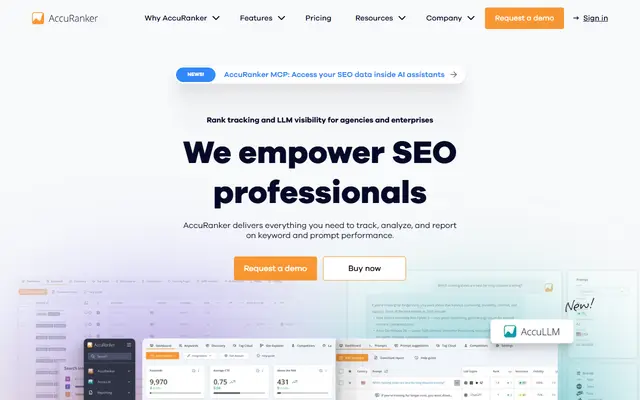 | AccuRanker | Adjacent | n/a | #68,087 | seen in search |
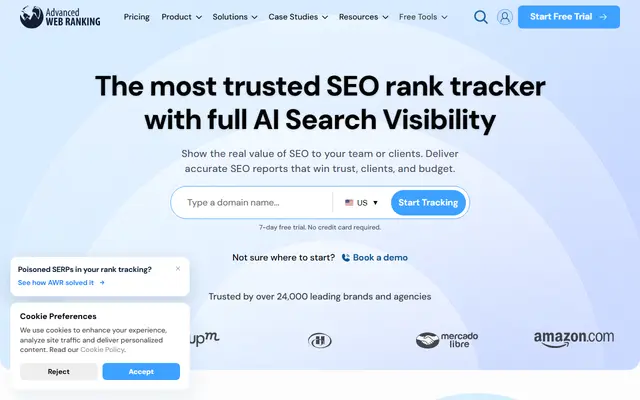 | Advanced Web Ranking | Adjacent | n/a | #23,528 | seen in search |
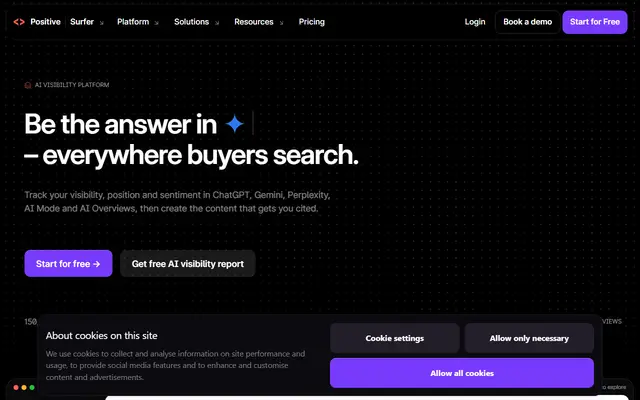 | Surfer SEO | Adjacent | n/a | #6,659 | seen in search |
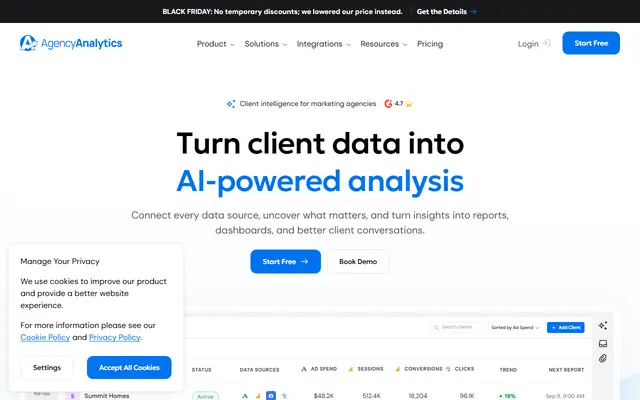 | AgencyAnalytics | Adjacent | n/a | #34,833 | seen in search |
 | Similarweb | Adjacent | 2007 | #1,728 | seen in search |
| Attensira | Adjacent | n/a | n/a | seen in search | |
| ContentSwift | Adjacent | n/a | n/a | seen in search | |
| Searchmetrics | Adjacent | n/a | n/a | seen in search |
Migration checklist: moving away from Seobility
Switching an SEO tool is mostly a data and habits problem. The software itself is quick to set up; the risk lies in losing history, breaking reports that people rely on, or discovering two weeks later that a tracked keyword set was never copied across. Plan the move as a small project with a start date, an owner and a rollback.
Begin by exporting everything you can while your current account is active. Keep a copy of keyword lists, ranking history, audit reports, any custom settings and the list of scheduled emails. Do this before you cancel or downgrade, because some products limit exports after a plan ends. Store the files somewhere your team can reach.
Run the old and new tools side by side for at least one full reporting cycle. Differences in how each counts a position or classifies an issue are normal; what you need is to understand the gap so that trend lines in reports still make sense. Note the date of the switch in your reports so readers know why a graph shifts.
Finally, keep the free search-engine consoles verified for every domain. They stay constant when tools change, and they let you check a new tool's numbers against first-party data.
- Export keyword lists, ranking history, issue lists and report templates before changing plans.
- List every scheduled report and email, with its recipients, so none disappears silently.
- Recreate projects in the new tool and import the same keyword set and locations.
- Run both tools in parallel for one reporting cycle and record the differences.
- Verify each domain in Google Search Console and Bing Webmaster Tools as a neutral reference.
- Update documentation and shared logins, and remove old seats once the new tool is accepted.
- Add a dated note to reports on the day of the switch so trend changes are explained.
- Cancel the old subscription only after the overlap period and a final export.
Mistakes to avoid when switching
The most common mistake is picking a replacement from a feature table alone. Tables flatten differences in data freshness, limits and usability, and they rarely show how a tool behaves on a site like yours. Test with your own domain before deciding.
A second mistake is overbuying. Teams sometimes move from a modest tool to an enterprise platform to solve one narrow gap, then use a fraction of it. Name the gap first. If the gap is rank tracking, a specialist may be cheaper than a suite; if it is audits, a crawler may be enough.
A third is treating a number from one tool as truth. Rankings, traffic estimates and backlink counts vary between products because each has a different index and method. Compare trends inside one tool, and use first-party consoles for the final word.
Last, many teams forget the people side. A new tool needs training, new templates and agreement on which numbers appear in reports. Plan an hour for each person, and write down who owns the account.
- Choosing from feature lists without running the tool on your own site.
- Paying for an enterprise platform to fix one small gap.
- Comparing absolute numbers across tools instead of trends within one tool.
- Cancelling the old subscription before exporting history and reports.
- Skipping training and report templates, so the new tool stays unused.
- Assuming an unconfirmed or little-known product is safe without checking its site and support.
What the public data says about these alternatives
Across the 49 alternatives, the largest groups are adjacent with 12, regional with 8, direct with 7 and enterprise with 7. Open-source accounts for 5, budget for 4, built-in for 3, free for 2 and self-hosted for 1. All 49 were seen in search during our November 2026 review, and none is marked unconfirmed.
Seobility itself has a Majestic rank of 19,931 and a Tranco rank of 53,857. Among the alternatives with a rank in our data, the lowest numbers, which mean the most referenced domains, belong to Bing Webmaster Tools (117), Google Search Console (227), Semrush (653) and Ahrefs (823). Moz Pro follows at 848. At the other end, SEO PowerSuite has 343,262, which reflects how a desktop-first product is referenced, not necessarily how widely it is used.
Founded years in our data range from 2004 for Moz Pro to 2012 for SE Ranking, with Semrush at 2008, Ahrefs at 2010 and Similarweb at 2007. Headquarters countries include the United States, the United Kingdom, Singapore, the Netherlands and Israel, and the regional group adds Germany, France and Russia. Rankings are only a rough signal of visibility, not of quality, so use them for context and not for the final decision.
Frequently asked questions
What is the best free alternative to Seobility?
Based on public sources, the free group lists Ahrefs Webmaster Tools and Bing Webmaster Tools, and Google Search Console is in the built-in group. Together with an open-source crawler such as SiteOne Crawler or Greenflare, they cover search data and technical audits for your own sites at no licence cost, though not competitor research.
Is there an open-source alternative to Seobility?
Yes. Our list shows SiteOne Crawler (MIT), Scrawly (MIT), SEOnaut, Greenflare and OpenSEO as open-source, and LibreCrawl as self-hosted. They mostly replace the audit part rather than rank tracking or backlink research, and you carry the installation and maintenance yourself.
What is the cheapest Seobility alternative?
We do not check prices, so we cannot name the cheapest. The budget group contains Mangools, Ubersuggest, Morningscore and InstaRank SEO, and the free group has Ahrefs Webmaster Tools and Bing Webmaster Tools. Compare current pricing on each vendor's site, and count limits on projects, keywords and crawled pages as well as the headline figure.
Which alternatives are closest in scope to Seobility?
The direct group is the closest: SE Ranking, Moz Pro, SEO PowerSuite, Raven Tools, Sitechecker, Search Atlas and PromoPilot. They combine audits, tracking and reporting. Run the same site through two of them and compare how each classifies issues before you decide.
Are there alternatives for the German market?
The regional group includes Sistrix, XOVI and Ryte from Germany. Sistrix lists a Germany headquarters and a Majestic rank of 44,381, and Ryte has a rank of 24,714. Regional tools tend to handle local language and search data well, but check availability and support for your country on each vendor's site.
Can I export my data before switching?
Check your current plan before cancelling. Export keyword lists, ranking history, audit reports and report templates while the account is active, since some products limit access after a plan ends. We do not verify export formats, so confirm what your account allows and keep copies in a shared location.
Do I need an enterprise platform instead of Seobility?
Only if you can name a capability you lack, such as multi-brand reporting, log-file analysis or role-based access. Semrush, Ahrefs, BrightEdge, Conductor, seoClarity, Botify and Lumar are the enterprise-grade options in our list. For one site or a few, a direct or budget tool is often enough.
Are the listed alternatives confirmed to exist?
For Seobility, all 49 alternatives were seen in search during our November 2026 review. That means they appeared as live products in search results, not that we tested them. We do not verify prices, features or current availability, so check each vendor's own site before you rely on any of them.
Bottom line
There is no single best replacement for Seobility, because the right choice depends on what you are replacing. For a like-for-like swap, start with the direct group and compare SE Ranking, Moz Pro and Sitechecker on your own site. For a lower cost, look at Mangools or the free consoles from Google and Bing. For deep competitor and backlink work, Semrush and Ahrefs are the usual names.
If you prefer to control your data, an open-source or self-hosted crawler can replace the audit side. If your market is Germany, France or Russia, a regional tool may fit better than a global one. Whatever you pick, export your history first, run both tools in parallel for a cycle and decide against criteria you wrote down. Browse the SEO tools category for related products, and read the methodology to see how this list was built.
More alternatives pages related to Seobility
Where Seobility shows up as an alternative
Seobility appears in the alternatives lists of 3 other products: rankingCoach, Semrush, AccuRanker. Comparing those lists shows which tools keep being recommended across the whole category.
Explore more in SEO & Search Tools
Keyword research, rank tracking, audits and content optimization. Browse the full SEO & Search Tools hub, or jump to a related comparison: BuiltWith, BrightLocal, rankingCoach, Google Keyword Planner, Semrush, Ahrefs, SpyFu, AccuRanker.