Data, proxies and utilities alternatives
Web data collection and everyday system utilities are an odd pairing, but both are about getting information out of something large and awkward. Proxy networks and scraping services let companies collect public web data at scale, while disk analyzers let a person find out what is eating a hard drive. This hub joins the three products in that area that have their own alternatives pages: Oxylabs, Bright Data and WinDirStat.
Between them the three pages hold 150 alternative entries in our data. Direct competitors make up 36 of them and open-source projects 31, with budget-friendly options at 14, self-hosted and adjacent at 14 each, free at 11, regional at 10, enterprise-grade and built-in at 8 each and DIY at 4. The open-source and free share is high because both halves of this category, crawling frameworks and disk tools, have a strong tradition of free software.
All of it is based on public sources reviewed in November 2026, not on hands-on testing. We do not list prices, success rates or speed benchmarks, because our data does not carry them in a reliable form. For Oxylabs only 15 of its 50 entries were seen in search, so read the unconfirmed labels carefully. The methodology page explains the sources and labels.
- Direct: 25 (25%)
- Budget: 6 (6%)
- Free: 8 (8%)
- Enterprise: 3 (3%)
- Open source: 23 (23%)
- Self-hosted: 10 (10%)
- Regional: 4 (4%)
- Built-in: 6 (6%)
- Adjacent: 12 (12%)
- DIY: 3 (3%)
Data, Proxies & Utilities guides: pick the product you want to replace
What this category covers
The proxy and scraping side of the category covers services that route requests through other IP addresses and sometimes render pages, solve blocks and return structured data. Our data describes Bright Data as a provider of residential, datacenter, ISP and mobile proxy networks with a web scraper and unlocker API and ready-made datasets, and notes that it was renamed from Luminati Networks in March 2021. Oxylabs is its closest rival, with Bright Data listed first among its alternatives.
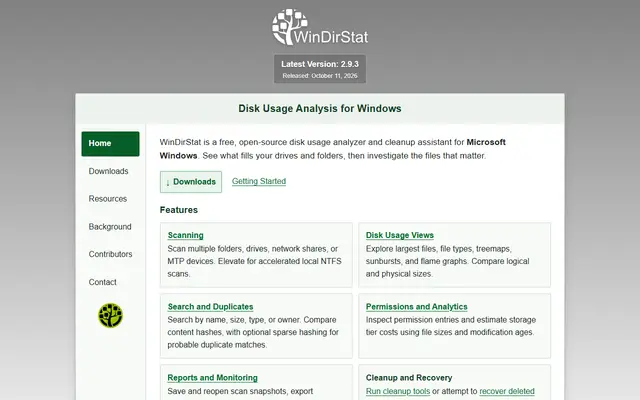
The utilities side is represented by WinDirStat, which our data describes as a free, open-source disk space analyzer for Windows that shows a treemap of folders and files. The project is still alive, with version 2.x releases since October 2024, distributed through GitHub, winget, Chocolatey, Scoop and the Microsoft Store, while SourceForge is marked as outdated. WinDirStat itself is not part of its own list.
Many names recur between the proxy pages, including Decodo, SOAX, IPRoyal, Zyte, ScraperAPI, Apify, Rayobyte, ZenRows, Webshare and Geonode. Seeing a provider on both lists is a useful signal that it competes across the field. For marketing-oriented data work, see the lead intelligence hub.
How to choose in data, proxy and utility tools
For proxies and scraping, start with the target. Scraping a few hundred pages from friendly sites needs a very different setup from collecting millions of pages from sites with strict bot defences. Decide whether you want only IP addresses and will write your own code, or a scraping API that handles rendering and retries for you. Open-source frameworks such as Scrapy, Crawlee and Playwright give you the code but need proxies of their own.
Also consider legality and ethics. Collect only public data, respect each site's terms and robots rules, and follow data protection law in the countries involved. This is general information, not legal advice. Our data also flags a provider whose network was disrupted by Google in January 2026 and carries a risk note, which is a reminder to ask where a proxy provider's addresses come from.
For disk analyzers, decide the operating system first. Windows, macOS, Linux and headless servers each have their own best fits. Then pick between a graphical treemap and a text interface. Useful questions are:
- Which operating systems and file systems must the tool support?
- Do you need a graphical map or a fast command-line summary for servers?
- For proxies: which countries and IP types do you need?
- Do you want raw IPs, a scraping API or ready-made datasets?
- How will you handle retries, blocks and rendering of dynamic pages?
- What does the provider say about the origin of its IP addresses?
- Can you test with a small trial before committing to a larger volume?
Proxies, scraping APIs and frameworks: three layers
It helps to separate three layers that vendors often blur. The bottom layer is the proxy: an intermediary address that your requests pass through, available as residential, datacenter, ISP or mobile addresses. Providers such as Bright Data, Oxylabs, SOAX, IPRoyal and Webshare sell this layer, and you write the code that uses it.
The middle layer is the scraping API. You send a target address and receive the page, with rotation, retries and sometimes browser rendering handled for you. Our data places ScraperAPI, ScrapingBee, ZenRows, Scrape.do and Zyte here. The top layer is the framework or finished service: Scrapy, Crawlee and Playwright for developers, and Octoparse or ParseHub for people who prefer a visual tool. Moving up a layer saves effort but gives up control, and moving down does the opposite.
Many switching projects are really about changing layers rather than vendors. A team tired of managing proxy pools may choose a scraping API, while one that outgrows an API may bring the work in-house with a framework and bought proxies. Decide which layer you want before comparing names on the same line.
Why people switch
In the proxy market, the main reason is the match between cost model and usage. Some providers bill by traffic, others by request, and a pattern that suits one workload can look expensive under another. The second reason is block rates on difficult targets, where results differ between providers and over time. The third is the wish for fewer moving parts, which pushes teams towards a scraping API instead of managing proxy pools.
For WinDirStat, switching is usually about platform or speed. Mac and Linux users cannot run it, server administrators want a terminal tool over SSH, and people with huge drives look for tools that read the file system index directly. Our data lists WizTree as a Windows tool that reads the NTFS master file table, which is why it is described as very fast.
Other motives include control and privacy: a team may prefer to run Squid or 3proxy on its own server, or to host a web-based disk analyzer on a NAS. Whatever the reason, write it down before shortlisting.
About Oxylabs alternatives
Oxylabs, founded in 2015 in Lithuania with a Majestic rank of 34,520, is a proxy and web data provider. Our Oxylabs alternatives page lists 50 options, of which only 15 were seen in search. Direct competitors include Bright Data, Decodo, SOAX, IPRoyal, Zyte, ScraperAPI and Apify. Webshare and Scrape.do are in the budget group, and Diffbot and Import.io are enterprise-grade. Scrapy, Crawlee and Playwright lead the open-source entries, with Squid and 3proxy for self-hosting.
About WinDirStat alternatives
WinDirStat, founded in 2003, is a free open-source disk analyzer for Windows with a Majestic rank of 30,217. Our WinDirStat alternatives page lists 50 options, 36 seen in search. Windows options include WizTree, TreeSize and SpaceSniffer, while DaisyDisk serves macOS. Folder Size and OmniDiskSweeper are free entries. QDirStat, Baobab, Filelight and GrandPerspective lead the open-source choices, and ncdu, gdu and dust cover the terminal. Synology Storage Analyzer is built into DSM for NAS owners.
About Bright Data alternatives
Bright Data, founded in 2014 in Israel with a Majestic rank of 23,266, is described in our data as working as of 22 November 2026. The Bright Data alternatives page holds 50 live alternatives, 43 seen in search, and lists three retired or renamed names separately. Direct options include Oxylabs, Decodo, SOAX, IPRoyal, Zyte, Apify and ScraperAPI. Webshare, Geonode and DataImpulse appear in the budget group, Diffbot and Coresignal in the enterprise group, and Scrapy and Crawlee in the open-source group.
Browse data & utilities alternatives by type
- Direct alternatives: 25 in this category. Products that solve the same core problem for the same kind of buyer. Switching usually means moving data and retraining people, not changing how you work.
- Budget-friendly alternatives: 6 in this category. Lower-cost tools that cover the essential jobs without the full feature surface. A good fit when you pay for seats or features you rarely open.
- Free options: 8 in this category. Tools with a free plan or free access that is usable on its own. Limits on volume, users or history usually apply, so check them before you commit.
- Enterprise-grade alternatives: 3 in this category. Platforms built for large teams: governance, audit trails, integrations and support contracts. They tend to cost more and take longer to roll out.
- Open-source alternatives: 23 in this category. Projects whose source code is public. You can inspect, modify and often self-host them, at the price of doing more of the maintenance yourself.
- Self-hosted alternatives: 10 in this category. Software you run on your own server or computer. You keep control of the data and the uptime, and you take on updates, backups and security.
- Regional and local alternatives: 4 in this category. Vendors that are strongest in a particular country or region: local languages, local payment methods, local data-residency rules and local support hours.
- Built-in features of platforms you already use: 6 in this category. Capabilities that already ship inside a suite or platform you pay for. They rarely match a specialist tool feature for feature, but they cost nothing extra.
- Adjacent tools: 12 in this category. Products that cover part of the job or approach it from another angle. Useful when you only need a slice of the original product.
- DIY and self-made approaches: 3 in this category. Spreadsheets, scripts and workflows you assemble yourself. Cheap and flexible for small needs, but they depend on whoever built them.
How the ten types show up in this category
Our data holds 36 direct, 14 budget-friendly, 11 free, 8 enterprise-grade, 31 open-source, 14 self-hosted, 10 regional, 8 built-in, 14 adjacent and 4 DIY entries for this hub. The split shows two separate markets. On the commercial side, direct competitors and a few enterprise data vendors dominate. On the tooling side, open-source and free options dominate.
Start with the direct hub for a like-for-like provider. The budget-friendly and free hubs list cheaper proxy plans and free disk tools, and the enterprise-grade hub covers managed data vendors. Developers will find frameworks under open-source, while proxies you run on your own server are in self-hosted. Built-in utilities such as Windows storage settings or Synology tools sit under built-in, and one-off scripts under DIY. Note that adjacent entries, such as no-code scrapers, solve a related rather than identical problem.
Pitfalls to avoid
The first pitfall in data collection is testing on easy targets. A provider that works on a simple page may struggle on a protected one, so trial on the sites you actually care about. The second is ignoring where addresses come from; responsible sourcing matters for legal and reputational reasons. The third is underestimating the engineering needed to run your own proxies, since reputation of an IP range is hard to build and easy to lose.
For disk tools, the main pitfall is deleting files on the strength of a pretty chart. A treemap shows size, not importance, so check what a folder is before removing it, and keep a backup. Also remember that free tools differ in how they treat network drives and permissions. Many listings in this hub are unconfirmed, so verify that a project is maintained before installing it on a production machine.
Frequently asked questions
What are the main alternatives to Oxylabs?
Based on our data, direct options include Bright Data, Decodo, SOAX, IPRoyal, Zyte, ScraperAPI, Apify and Rayobyte. Only 15 of Oxylabs' 50 entries were seen in search, so confirm the others on the vendor's own site before shortlisting them.
Which Bright Data alternatives are open source?
Scrapy, Crawlee, Crawl4AI, Firecrawl, CloakBrowser and Playwright are listed as open-source choices. They are frameworks or tools rather than proxy networks, so you still need to supply IP addresses. Firecrawl's licence is described in our source as disputed, so read it before use.
Is there a free alternative to WinDirStat?
Yes. WinDirStat itself is free and open source. Alternatives include Folder Size, OmniDiskSweeper, QDirStat, Baobab, Filelight, GrandPerspective, ncdu, gdu and dust, depending on whether you use Windows, macOS, Linux or a server. Check platform support on each project page.
What is the fastest WinDirStat alternative?
Our data describes WizTree as very fast on Windows because it reads the NTFS master file table. For terminals, gdu, diskus and dust are described as quick in benchmark discussions. We did not measure speed ourselves, so test on your own drives.
Can I run my own proxies instead of buying them?
Yes. Squid, 3proxy, CloudProxy, ProxyForge and docker-rotating-proxy are self-hosted options in our data. Our source warns that datacenter IP reputation is the key weakness of this approach, so it works for tolerant targets but may fail on strict ones.
Is web scraping legal?
It depends on the country, the data and the site's terms. This site gives general information, not legal advice. Collect only public data, respect terms and robots rules, and follow data protection law. Ask a qualified adviser before large-scale projects.
Why did Bright Data change its name?
Our data states that it was renamed from Luminati Networks in March 2021, confirmed by Wikipedia and by the company's own blog. It was working as of 22 November 2026, and no closure or acquisition was found. The page lists a few older names separately because they are not live alternatives.
Are the listed alternatives tested by you?
No. The lists come from public sources reviewed in November 2026, and we do not test, rank by quality or accept payment for inclusion. Unconfirmed entries were not matched in our search review. Use the pages to build a shortlist, then verify current features and terms yourself.
Other categories
- CRM & Sales SoftwarePipeline management, customer records and sales automation.
- Lead Intelligence & ProspectingB2B contact data, enrichment, visitor identification and outreach.
- Email Marketing & DeliveryNewsletters, automation, transactional email and sending infrastructure.
- SEO & Search ToolsKeyword research, rank tracking, audits and content optimization.
- Marketing Analytics & TrackingWeb analytics, reporting dashboards, click-fraud protection and tag management.
- Social, Influencer & Affiliate MarketingSocial media management, influencer marketplaces and partner programs.
- Customer Support & MessagingHelp desks, shared inboxes, live chat and messaging platforms.
- IT Management & MonitoringService management, infrastructure monitoring, device management and remote access.
- Cloud, Hosting & InfrastructureVirtual servers, hosting providers, virtualization and edge networks.
- Payments, Spend & CryptoPayment processing, corporate cards, expense management and exchanges.
- Accounting & ERP SoftwareBookkeeping, invoicing and small-business ERP.
- HR & Global HiringHR information systems, employer-of-record and global payroll.
- Telephony, Video & CommunicationsCloud phone systems, contact centers, CPaaS and video hosting.
- Documents, Projects & ProductivityE-signature, proposals, project management, intranets and surveys.
- Everyday AlternativesAlternatives for fitness, cooking, car parts and legal streaming.
- Personal Finance & InvestingAlternatives to traditional student loans, investing platforms and credit scoring. General information only.