Payments, Spend & Crypto: alternatives to processors, expense tools, payout platforms and exchanges
Money software splits into several jobs that are easy to confuse. Taking a card payment on a website, issuing company cards and controlling expenses, paying freelancers in other countries and buying digital assets are four different activities, regulated in different ways, and each has its own set of competing products. This hub covers five products that stand for those jobs and links to a detailed alternatives guide for each.
Our data holds 50 alternatives per product, 250 entries in total, sorted into types. Regional tools are the largest group with 62 entries, followed by direct with 56, adjacent with 29, enterprise-grade with 24, open-source with 21, budget-friendly with 20, built-in with 16, free with 13 and self-hosted with 9. No DIY entries appear in this category, which is understandable given the regulatory weight. Airwallex is the name that recurs most, appearing in four of the five guides.
The content is general information, not financial, tax or legal advice, and rules, licences and availability depend on the country. It is based on public sources reviewed in November 2026. We did not test any product, and we do not publish fees, limits or rates, which are not part of our data. Nothing here is a recommendation to buy, sell or hold anything. The methodology page explains the sources and their limits.
- Direct: 38 (25%)
- Budget: 10 (7%)
- Free: 7 (5%)
- Enterprise: 12 (8%)
- Open source: 16 (11%)
- Self-hosted: 7 (5%)
- Regional: 42 (28%)
- Built-in: 9 (6%)
- Adjacent: 9 (6%)
Payments, Spend & Crypto guides: pick the product you want to replace

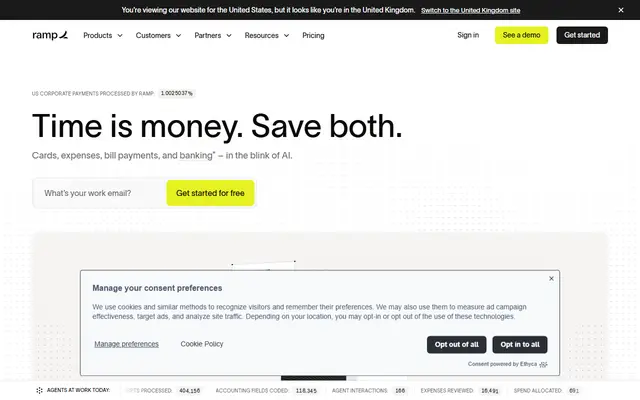

What the payments, spend and crypto category covers
Four activities sit under this heading. Payment processing lets a business accept cards, wallets and bank payments, and ranges from simple checkout buttons to full billing systems. Spend management covers corporate cards, expense reports, receipts and approvals. Cross-border and payout platforms move money between countries, pay contractors and marketplace sellers, and hold balances in several currencies. Crypto platforms let people buy, sell and store digital assets, either through an exchange or in a wallet they control.
The five products here map to those jobs. Stripe is a payment platform, Ramp and Expensify are spend and expense tools, Payoneer is a cross-border payments and payout platform, and Coinbase is a crypto exchange and wallet. Because the jobs differ, so do the alternatives, and a name that is a sensible swap in one guide may be irrelevant in another.
Adjacent decisions are covered in other hubs. Teams that keep books in accounting software should read the accounting and ERP category, and companies that pay staff or contractors abroad should read the HR and global hiring category. Individuals comparing budgeting tools can start from the personal finance category.
How to choose a payments or finance alternative
Begin with geography. Payment methods, licences and consumer protections differ by country, and a provider that is strong in one market may not operate in another. Our data shows this clearly: the regional group is the largest, made up of tools built around local payment habits. Confirm that any shortlisted provider is licensed and available where your customers or entities are.
Then match the product to the job. A software business selling worldwide cares about tax handling and subscriptions, a marketplace cares about payouts, a finance team cares about approvals and receipts, and an individual investor cares about custody and fees. Read the regulatory and safety information on each vendor's site, and consult a qualified professional for tax, legal or investment questions.
- Availability: countries, currencies and customer types the provider serves.
- Licensing and safeguards: how funds are held and which regulator oversees the firm.
- Payment methods: cards, wallets, bank transfers and local methods.
- Fees and limits: check the current fee schedule, since we list none.
- Integrations: accounting software, e-commerce platforms and ERP systems.
- Controls: approval rules, roles, audit trails and reporting.
- Exit: ability to export transaction history and move balances.
Why people look for alternatives in payments and finance
Pricing and fit lead the list. A processor chosen for developer convenience may later look expensive at volume, and a spend tool may feel heavy for a small team that mostly needs receipts. Geography is next: merchants selling in some markets often add a regional provider because local methods convert better than cards alone.
Account stability and policy matter too. Businesses that have had accounts limited, or that sell in categories some providers restrict, search for providers with different rules. Operating model plays a part as well: software sellers sometimes prefer a merchant-of-record service such as Paddle or Lemon Squeezy, which handles sales tax collection on their behalf, over a processor where they remain the seller.
For crypto, the reasons are availability, custody and jurisdiction. Our Coinbase notes state that the list is a reference of alternative exchanges, wallets and brokers, not an investment recommendation, and that licensing and availability depend on the user's country.
About Stripe alternatives
Stripe was founded in 2010 in the United States and has a Majestic rank of 136 in our data. All 50 of its alternatives were seen in our November 2026 search review. Even so, read each candidate's own pages before relying on it.
Direct names include PayPal, Square, Braintree, Airwallex and Paddle, and enterprise-grade processors include Adyen, Checkout.com, Worldpay and Nuvei. Regional options include Razorpay, Mollie, Paystack and Flutterwave. BTCPay Server is the self-hosted entry. The Stripe alternatives page has the full list, and the Payoneer guide covers cross-border money.
About Ramp alternatives
Ramp was founded in 2019 in the United States and holds a Majestic rank of 12270. Twenty of its 50 alternatives were seen in search. It sits in the corporate card and spend-management space. The remaining entries are unconfirmed, so check them directly.
Direct options include Brex, Navan, Bill Spend and Expense, and Airwallex. Enterprise-grade names include SAP Concur, Coupa and Tipalti, while European options include Spendesk, Payhawk, Pleo and Qonto. Built-in routes include the expense modules of Xero and QuickBooks Online. See the Ramp alternatives page, and the Expensify guide for a lighter expense tool. Compare card controls and approval flows.
About Payoneer alternatives
Payoneer was founded in 2005 in the United States and has a Majestic rank of 7919. Thirteen of its 50 alternatives were seen in search, so many entries are unconfirmed. Verify the unconfirmed ones directly before using them.
Direct options include Wise, PayPal, Airwallex, Revolut Business and WorldFirst. Enterprise-grade options for payouts and global payroll include Tipalti, Deel and Rise, and regional ones include Skydo, PingPong and LianLian Pay. Platform-based routes such as Upwork Payments and Fiverr Payments are built in. The Payoneer alternatives page lists all of them, and the Remote.com guide covers contractor payments. Compare payout speed and supported countries.
About Expensify alternatives
Expensify was founded in 2008 in the United States and has a Majestic rank of 21407. Twenty of its 50 alternatives were seen in search. It is an expense reporting tool, so its alternatives focus on receipts, approvals and reimbursements. The rest are unconfirmed and need a direct check.
Direct options include Zoho Expense, SAP Concur, Navan, Ramp, Brex and Fyle. Budget-minded teams look at Shoeboxed or Dext, and open-source choices include Odoo, ERPNext and Akaunting. Built-in modules include QuickBooks Online, Xero and FreshBooks. The Expensify alternatives page has the full list, and the Ramp guide covers the spend side.
About Coinbase alternatives
Coinbase was founded in 2012 in the United States and has a Majestic rank of 1371. Thirty-eight of its 50 alternatives were seen in search. It is a crypto exchange, wallet and broker, and the notes say the product is active and unrenamed. The list is reference information, not advice. Entries marked unconfirmed need checking.
Exchanges named in the data include Kraken, Bitstamp, Gemini and Bitpanda, plus Bitvavo and Coincheck as regional options. Wallets include Exodus, MetaMask and Trezor, and open-source choices include Bisq, Sparrow and Electrum. Availability and licensing differ by country. See the Coinbase alternatives page, and the Stripe guide for payments.
Tools that keep showing up across payments & spend lists
When the same name appears in several alternatives lists, it is a useful signal that the tool is broadly relevant in this category. These are the names that appear most often across the 3 guides above:
- PayPal — listed in 2 guides
- Airwallex — listed in 2 guides
Browse payments & spend alternatives by type
- Direct alternatives: 38 in this category. Products that solve the same core problem for the same kind of buyer. Switching usually means moving data and retraining people, not changing how you work.
- Budget-friendly alternatives: 10 in this category. Lower-cost tools that cover the essential jobs without the full feature surface. A good fit when you pay for seats or features you rarely open.
- Free options: 7 in this category. Tools with a free plan or free access that is usable on its own. Limits on volume, users or history usually apply, so check them before you commit.
- Enterprise-grade alternatives: 12 in this category. Platforms built for large teams: governance, audit trails, integrations and support contracts. They tend to cost more and take longer to roll out.
- Open-source alternatives: 16 in this category. Projects whose source code is public. You can inspect, modify and often self-host them, at the price of doing more of the maintenance yourself.
- Self-hosted alternatives: 7 in this category. Software you run on your own server or computer. You keep control of the data and the uptime, and you take on updates, backups and security.
- Regional and local alternatives: 42 in this category. Vendors that are strongest in a particular country or region: local languages, local payment methods, local data-residency rules and local support hours.
- Built-in features of platforms you already use: 9 in this category. Capabilities that already ship inside a suite or platform you pay for. They rarely match a specialist tool feature for feature, but they cost nothing extra.
- Adjacent tools: 9 in this category. Products that cover part of the job or approach it from another angle. Useful when you only need a slice of the original product.
The types of alternatives in payments and finance
Direct alternatives are the like-for-like swaps, such as Brex for Ramp or Kraken for Coinbase. Regional providers such as Mollie, Razorpay, Xendit and Spendesk are tuned to local payment methods and rules. Enterprise-grade processors and spend platforms, including Adyen, Coupa and Tipalti, suit large organisations with procurement teams.
Budget-friendly and free tools reduce cost, with Relay and Wave among the examples in our data. Open-source and self-hosted software, such as Hyperswitch, Lago, Firefly III and BTCPay Server, gives control but puts compliance and security on you. Built-in options come from platforms you already use, such as Shopify Payments or accounting software, and adjacent products cover a narrow part of the job, for example Primer for payment orchestration or Hodl Hodl for peer-to-peer crypto trades.
Pitfalls when changing financial tools
Money tools carry legal and operational weight, so mistakes cost more than in most software. Avoid switching in the middle of a financial period, keep the old account open until pending settlements and refunds have cleared, and keep records of past transactions, since regulators and tax authorities may ask for them. Where the stakes are high, speak to a qualified professional first.
- Moving saved customer payment details without checking what the old provider will transfer.
- Closing an old account while refunds, disputes or payouts are still pending.
- Ignoring licensing, since a provider may operate in your country only for some customer types.
- Choosing on the headline fee and ignoring currency conversion and payout costs.
- Treating unconfirmed entries in our data as vetted providers.
Frequently asked questions
What are the main alternatives to Stripe?
Our data lists PayPal, Square, Braintree, Airwallex, Rapyd and Paddle as direct options, Adyen, Checkout.com, Worldpay and Nuvei at the enterprise-grade end, and Mollie, Razorpay, Paystack and Flutterwave regionally. All 50 were unconfirmed in our review, so verify availability, licensing and fees for your country.
What is a merchant of record and why does it matter?
A merchant of record is the company that legally sells the product to the customer and handles tax collection and compliance, instead of you. Paddle, Lemon Squeezy, FastSpring and Polar appear among Stripe alternatives in our data. This is general information; ask a tax professional how it applies to you.
What can replace Expensify or Ramp?
For expense reports, our data lists Zoho Expense, SAP Concur, Navan, Fyle and Rydoo. For corporate cards and spend, it lists Brex, Bill Spend and Expense, Spendesk, Payhawk and Pleo. Open-source routes include Odoo and ERPNext. Compare approval controls and accounting integrations on each vendor's site.
Which options suit paying freelancers abroad?
Payoneer's alternatives include Wise, PayPal, Airwallex, Revolut Business, Tipalti, Deel and Rise, and the Remote.com guide covers contractor platforms in more detail. Fees, supported countries and tax reporting differ. This is general information, not tax or legal advice, so check local rules. Also compare how each platform handles currency conversion.
Does your list of Coinbase alternatives recommend any exchange?
No. The list is a reference of exchanges, wallets and brokers named in public sources, and it is not an investment recommendation. Licensing and availability depend on your country, and crypto assets carry risk. Read each platform's terms and regulatory information, and consider professional advice.
Are there open-source payment tools?
Yes. The Stripe guide lists Hyperswitch, Lago, Kill Bill, Formance and Paymenter, and BTCPay Server as a self-hosted option for bitcoin payments. They still need a payment partner for card processing, and you take on security and compliance work, so they mainly suit technical teams.
Which regional providers are listed?
Examples in our data include Razorpay (India), Mollie (Netherlands), Mercado Pago, dLocal and EBANX listed for Latin America, Xendit, Midtrans and KOMOJU, Paystack and Flutterwave, and Qonto and Spendesk (France). Availability varies by company location and customer type, so check each provider. Fees differ. Check local currency support and payout options as well.
How should I treat unconfirmed entries?
Unconfirmed means the entry came from our source data but we could not match it in the public search review of November 2026. That does not apply to the Stripe alternatives, which were all seen in search. Verify that the company is active, licensed in your country and suited to your use before considering it.
Other categories
- CRM & Sales SoftwarePipeline management, customer records and sales automation.
- Lead Intelligence & ProspectingB2B contact data, enrichment, visitor identification and outreach.
- Email Marketing & DeliveryNewsletters, automation, transactional email and sending infrastructure.
- SEO & Search ToolsKeyword research, rank tracking, audits and content optimization.
- Marketing Analytics & TrackingWeb analytics, reporting dashboards, click-fraud protection and tag management.
- Social, Influencer & Affiliate MarketingSocial media management, influencer marketplaces and partner programs.
- Customer Support & MessagingHelp desks, shared inboxes, live chat and messaging platforms.
- IT Management & MonitoringService management, infrastructure monitoring, device management and remote access.
- Cloud, Hosting & InfrastructureVirtual servers, hosting providers, virtualization and edge networks.
- Accounting & ERP SoftwareBookkeeping, invoicing and small-business ERP.
- HR & Global HiringHR information systems, employer-of-record and global payroll.
- Telephony, Video & CommunicationsCloud phone systems, contact centers, CPaaS and video hosting.
- Documents, Projects & ProductivityE-signature, proposals, project management, intranets and surveys.
- Data, Proxies & UtilitiesWeb data collection, proxy networks and system utilities.
- Everyday AlternativesAlternatives for fitness, cooking, car parts and legal streaming.
- Personal Finance & InvestingAlternatives to traditional student loans, investing platforms and credit scoring. General information only.