VMware alternatives: 50 virtualization options compared by type
VMware is the long-standing name in server and desktop virtualization. According to our data it was founded in 1998, is headquartered in the United States, lists about 34,000 employees, and its domain sits at Majestic rank 632 with a Tranco rank of 1826. Its products cover server virtualization, storage, networking, virtual desktops and desktop hypervisors, and public sources say it now belongs to Broadcom. That change is the main reason so many organisations are comparing options this year.
This page lists 50 alternatives and sorts them into ten types: direct platforms, a budget-friendly storage option, free desktop tools, enterprise-grade platforms, open-source projects, self-hosted components, regional vendors, built-in cloud services, adjacent products and a do-it-yourself stack. Because VMware is a family of products, each entry replaces a different part of it: a hypervisor, a storage layer, a network layer, a virtual desktop service or a laptop tool. Read the type guides with that in mind.
Everything here rests on public sources reviewed in November 2026. We did not run trials, and we do not quote prices or licence terms, because those are not part of our data and change often. Sixteen of the 50 entries are unconfirmed in our search review, and we say so wherever they appear. Use the page to build a shortlist, then verify current terms with each vendor. The wider cloud hosting category shows how infrastructure options relate.
VMware is available at vmware.com. Public records list VMware as founded in 1998. Its headquarters country is recorded as United States. The most recent public figure for its headcount is about 34,000 employees. Its domain ranks #632 in the Majestic Million, a free public list of the most-linked-to domains on the web. Its domain ranks #1,826 in the Tranco list of the most visited domains.
This page lists 50 alternatives to VMware, spread across 10 types: direct (7), budget (1), free (4), enterprise (3), open source (10), self-hosted (4), regional (11), built-in (3), adjacent (6), diy (1).
34 of the 50 entries were seen in live web search results during our November 2026 review; the remaining entries are labelled unconfirmed so you know where extra checking is needed.
Regional options cover Russia, China, Europe.
- Direct: 7 (14%)
- Budget: 1 (2%)
- Free: 4 (8%)
- Enterprise: 3 (6%)
- Open source: 10 (20%)
- Self-hosted: 4 (8%)
- Regional: 11 (22%)
- Built-in: 3 (6%)
- Adjacent: 6 (12%)
- DIY: 1 (2%)
34 of 50 entries (68%) were seen in live search results during our review; the rest are labelled “unconfirmed” and should be checked on the vendor site.
Quick comparison: the closest alternatives to VMware
| Site | Name | Type | Founded | Majestic rank | Check |
|---|---|---|---|---|---|
 | Microsoft Hyper-V (Windows Server) | Direct | 1975 | #9 | seen in search |
| HPE VM Essentials | Direct | 2015 | #1,097 | seen in search | |
 | Scale Computing HyperCore | Direct | n/a | #163,634 | seen in search |
 | VergeOS (VergeIO) | Direct | 2010 | #833,097 | seen in search |
| Oracle Linux Virtualization Manager | Direct | 1977 | #87 | seen in search |
What is VMware and why do people look for alternatives?
VMware is a family of virtualization products: vSphere and ESXi for running virtual machines on servers, vSAN for storage, NSX for networking, Horizon for virtual desktops, and Workstation and Fusion for running virtual machines on a personal computer. Our data records that the company was founded in 1998 in the United States and that its main domain ranks 632 in the Majestic Million.
The status notes in our data explain the current wave of interest in alternatives. VMware is owned by Broadcom, and after that deal public sources describe rising licence prices, though those figures come from vendor blogs and we did not verify them. The end-user computing division, which includes Horizon, was separated into a company called Omnissa, according to trade press. Workstation Pro and Fusion are reported to have become free, but licence terms should be checked with the vendor. The sources found no closure of VMware itself.
People therefore look elsewhere for several reasons. Cost is the loudest: organisations want to compare what a renewal now costs against other platforms. Packaging is another, since bundles can include components a team never used. Some want to reduce dependence on one vendor, others need a supplier in their own country, and a few simply want an open-source platform they can run themselves. Because every component has a different replacement, the sections below pair each type with the VMware part it replaces.
How we built this list
The list was compiled in November 2026 from public sources only: the Majestic Million ranking, the Tranco list, Wikidata for founding years and headquarters, and a manual review of public web search results. The methodology page states licences and limits.
Each entry is either seen in search, meaning we found it presented as a replacement or competitor, or unconfirmed, meaning it is in our source data but could not be matched in that review. Of the 50 entries here, 34 were seen in search and 16 are unconfirmed. Unconfirmed entries are listed for completeness and never offered as a top pick. We use types because the word alternative hides very different trade-offs, starting with direct alternatives and open-source alternatives. Inclusion is not paid for.
How to choose a VMware alternative
Start by inventorying what you actually use. Many estates rely on only the hypervisor and a management console, while others use storage, networking and virtual desktops from the same vendor. Each component has its own replacement: a hypervisor platform for server virtual machines, a replicated storage system for vSAN, a software-defined network for NSX, and a separate desktop service for Horizon. Choosing a platform before you know the scope leads to surprises.
Then weigh migration effort. Moving virtual machines between hypervisors usually means converting disk formats, changing drivers and re-testing applications, and some alternatives bring built-in conversion tools. Consider the skills of your team: an open-source platform is flexible but shifts support work to you, while a commercial platform includes support contracts. Finally, check hardware and software compatibility, backup tools and monitoring integrations, because these often decide whether a platform fits. For a look at related infrastructure monitoring, see the Datadog page. Weigh these criteria:
- Scope: hypervisor only, or also storage, networking and desktops.
- Migration path: conversion tools, downtime windows and rollback plans.
- Support model: vendor contract, community help or a specialist partner.
- Hardware fit: certified servers, existing storage and network gear.
- Ecosystem: backup, monitoring, disaster recovery and automation integrations.
- Licence model: subscription, perpetual or open source, and how cores or hosts are counted.
- Jurisdiction: where the vendor is based and where support staff sit.
Quick picks by situation
For the closest replacement of server virtualization, start with the direct group: Microsoft Hyper-V on Windows Server, HPE VM Essentials for HPE hardware, Scale Computing HyperCore for small and edge sites, VergeOS as a single stack covering the vSphere, vSAN and NSX roles, and Oracle Linux Virtualization Manager, built on oVirt. Nutanix AHV is the enterprise-grade hyperconverged choice seen in search, while Proxmox VE is described in our data as the most frequent replacement for ESXi.
For small clusters on a budget, StarWind is the listed budget pick for replacing vSAN. For laptops, VirtualBox replaces Workstation or Fusion, and UTM covers Apple Silicon Macs. For virtual desktops that used Horizon, look at Amazon WorkSpaces, Azure Virtual Desktop, Citrix DaaS and Parallels RAS, and read the Cloudflare page if your next step is moving workloads to the edge.
Teams in Russia will find zVirt, Basis Dynamix, HostVM and Rosplatforma, and European organisations can look at OVHcloud. Those who want to run everything themselves should read about XCP-ng with Xen Orchestra, oVirt, Apache CloudStack and OpenNebula. For public cloud alternatives to running your own servers, compare DigitalOcean and the SolarWinds page for monitoring.
All 50 alternatives to VMware by type
Direct alternatives to VMware (7)
Products that solve the same core problem for the same kind of buyer. Switching usually means moving data and retraining people, not changing how you work. For VMware, this list contains 7 entries in this group, including Microsoft Hyper-V (Windows Server), HPE VM Essentials, Scale Computing HyperCore, VergeOS (VergeIO) and Oracle Linux Virtualization Manager. See all direct alternatives across every product →
Choosing among direct alternatives to VMware
Direct alternatives replace the server virtualization layer. Our data lists seven, six of them seen in search. Microsoft Hyper-V is described as a replacement for ESXi that is native to Windows. HPE VM Essentials replaces vSphere and suits HPE hardware. Scale Computing HyperCore targets small and edge sites, VergeOS offers one stack in place of vSphere, vSAN and NSX, Oracle Linux Virtualization Manager replaces vCenter, and Platform9 provides a managed private cloud plane. XenServer, formerly Citrix Hypervisor, was not confirmed. See the direct hub. Because these platforms replace different layers, ask each vendor what it covers: hypervisor, management console, storage and networking are often sold separately. Compare hardware certification lists and the length of support commitments too.
| Site | Name | Type | Founded | Majestic rank | Check |
|---|---|---|---|---|---|
| Microsoft Hyper-V (Windows Server) | Direct | 1975 | #9 | seen in search |
| HPE VM Essentials | Direct | 2015 | #1,097 | seen in search | |
| Scale Computing HyperCore | Direct | n/a | #163,634 | seen in search |
| VergeOS (VergeIO) | Direct | 2010 | #833,097 | seen in search |
| Oracle Linux Virtualization Manager | Direct | 1977 | #87 | seen in search | |
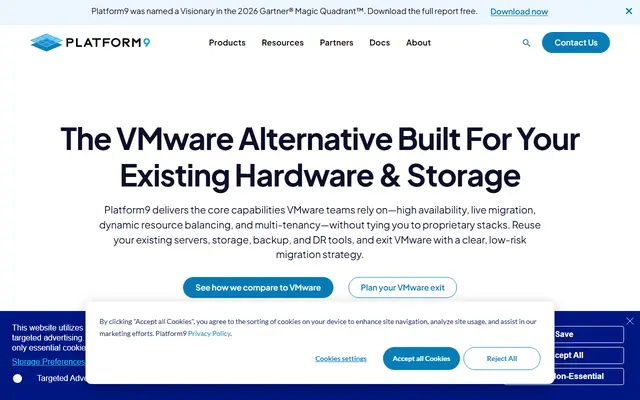 | Platform9 Private Cloud Director | Direct | n/a | #183,200 | seen in search |
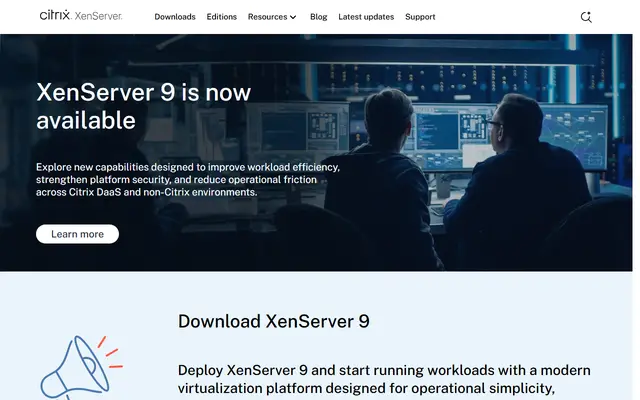 | XenServer (Cloud Software Group) | Direct | n/a | #57,536 | unconfirmed |
Budget-friendly alternatives to VMware (1)
Lower-cost tools that cover the essential jobs without the full feature surface. A good fit when you pay for seats or features you rarely open. For VMware, this list contains 1 entry in this group, including StarWind (VSAN/HCI). See all budget alternatives across every product →
Choosing among budget-friendly alternatives to VMware
The budget type has one entry: StarWind, founded in 2008 in the United States and seen in search, described as a fit for small clusters and a replacement for vSAN. Because the group is so small, compare it with the open-source storage tools in the self-hosted group. Check hardware requirements and support terms, and read the budget hub. Ask what the alternative does when a node fails, how many nodes are the minimum and which hypervisors it supports, since a cheap storage layer still needs a platform on top.
| Site | Name | Type | Founded | Majestic rank | Check |
|---|---|---|---|---|---|
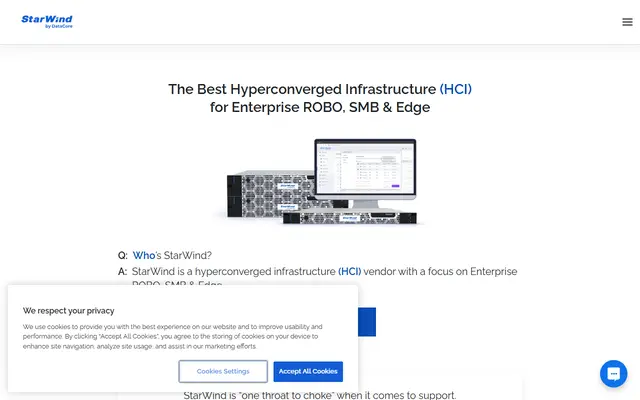 | StarWind (VSAN/HCI) | Budget | 2008 | #68,744 | seen in search |
Free options to VMware (4)
Tools with a free plan or free access that is usable on its own. Limits on volume, users or history usually apply, so check them before you commit. For VMware, this list contains 4 entries in this group, including VirtualBox, UTM, VirtualBuddy and MacVisor. See all free alternatives across every product →
Choosing among free alternatives to VMware
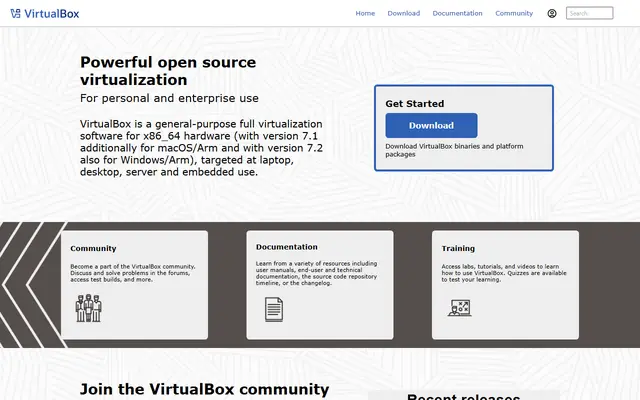
Free options are desktop tools. Our data lists four, all seen in search: VirtualBox (founded 2007) replaces Workstation or Fusion on a PC, UTM replaces Fusion on Apple Silicon, and VirtualBuddy and MacVisor run macOS virtual machines on a Mac. They suit developers and testers, not production servers. Verify licence terms on each project page, and see the free hub. They are fine for testing, development and training, where a missing support contract is acceptable. For anything customer-facing, treat them as a stepping stone and plan a supported platform.
Enterprise-grade alternatives to VMware (3)
Platforms built for large teams: governance, audit trails, integrations and support contracts. They tend to cost more and take longer to roll out. For VMware, this list contains 3 entries in this group, including Nutanix AHV, Azure Local and Red Hat OpenShift Virtualization. See all enterprise alternatives across every product →
Choosing among enterprise-grade alternatives to VMware
Enterprise-grade platforms target large data centres. Our data lists three. Nutanix AHV, founded in 2009 and seen in search, combines hyperconverged infrastructure with its own hypervisor in place of vSphere and vSAN. Azure Local, a hybrid option built on Hyper-V, and Red Hat OpenShift Virtualization, which runs virtual machines inside Kubernetes, were not confirmed. Expect sales-led buying and migration services. See the enterprise hub. Ask each vendor for a migration plan, supported hardware and the exact VMware components its offer replaces, because enterprise bundles rarely map one to one.
| Site | Name | Type | Founded | Majestic rank | Check |
|---|---|---|---|---|---|
 | Nutanix AHV | Enterprise | 2009 | #10,158 | seen in search |
 | Azure Local | Enterprise | 2010 | n/a | unconfirmed |
 | Red Hat OpenShift Virtualization | Enterprise | 1993 | #250 | unconfirmed |
Open-source alternatives to VMware (10)
Projects whose source code is public. You can inspect, modify and often self-host them, at the price of doing more of the maintenance yourself. For VMware, this list contains 10 entries in this group, including Proxmox VE, XCP-ng, oVirt, OpenNebula and Apache CloudStack. See all open source alternatives across every product →
Choosing among open-source alternatives to VMware
Open-source options give you code you can run yourself. Our data lists ten. Proxmox VE, XCP-ng, oVirt, OpenNebula, Apache CloudStack, SUSE Harvester and Lima were seen in search. OpenStack, Incus and KubeVirt were not confirmed. XCP-ng, a Xen fork, supports conversion through Xen Orchestra, while Harvester is noted as resource-hungry. See the open-source hub. Our data labels Proxmox VE as the most frequent ESXi replacement and Lima as a light option for Linux machines on Mac or Linux. Budget staff time for upgrades and monitoring, and consider a commercial support subscription where one exists.
| Site | Name | Type | Founded | Majestic rank | Check |
|---|---|---|---|---|---|
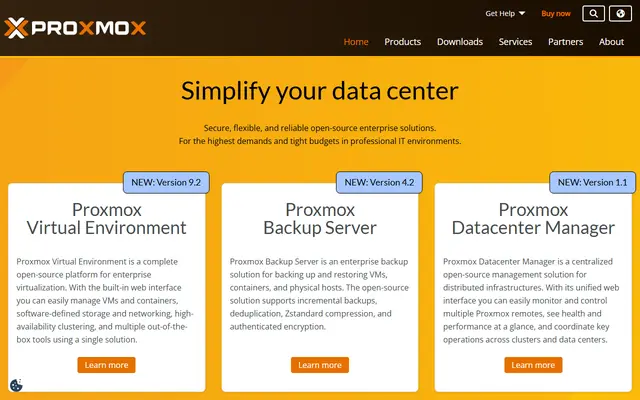 | Proxmox VE | Open source | n/a | #3,650 | seen in search |
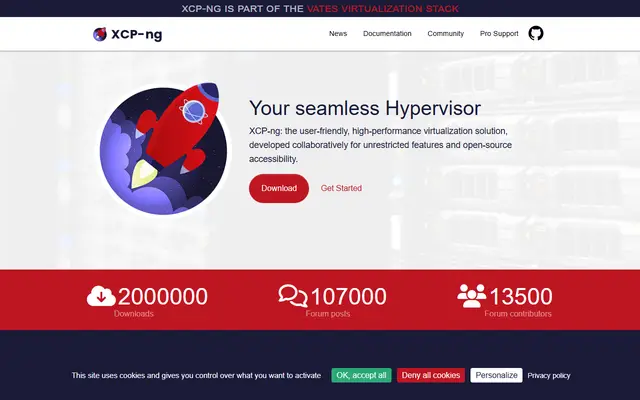 | XCP-ng | Open source | n/a | #93,385 | seen in search |
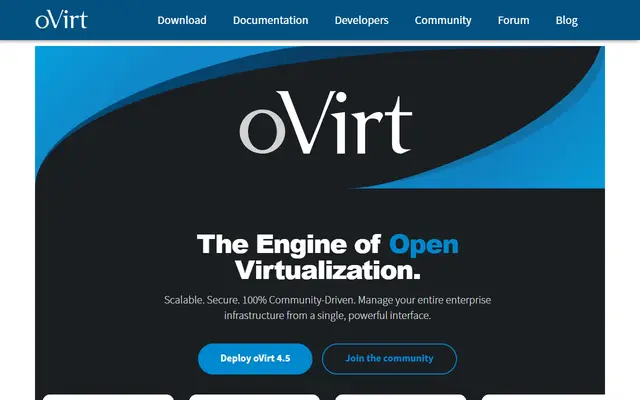 | oVirt | Open source | n/a | #98,064 | seen in search |
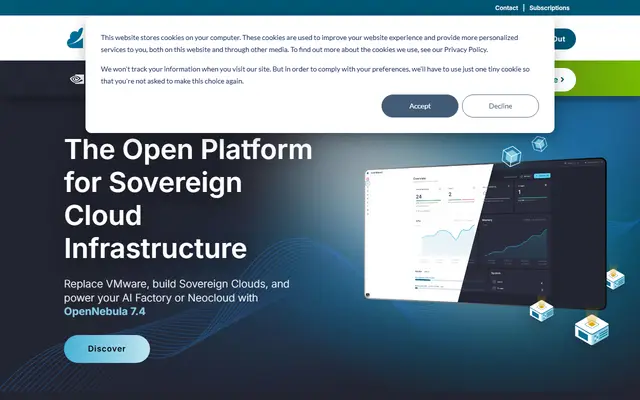 | OpenNebula | Open source | n/a | #164,837 | seen in search |
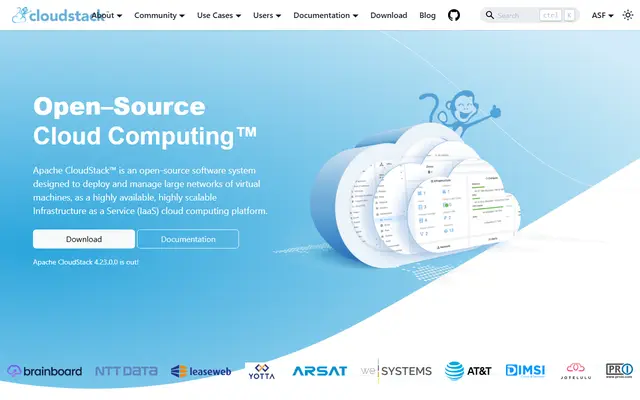 | Apache CloudStack | Open source | 2013 | n/a | seen in search |
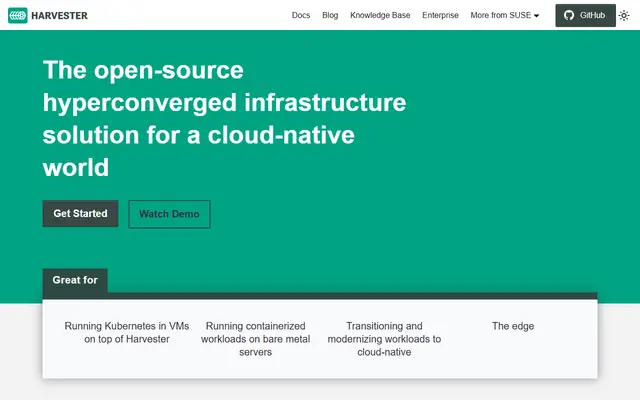 | SUSE Harvester | Open source | n/a | #664,278 | seen in search |
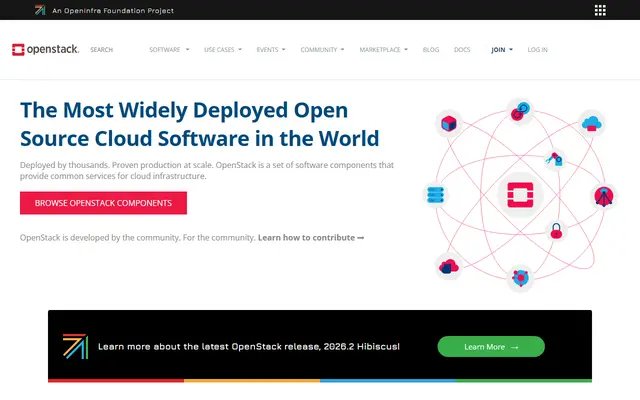 | OpenStack | Open source | 2010 | #6,306 | unconfirmed |
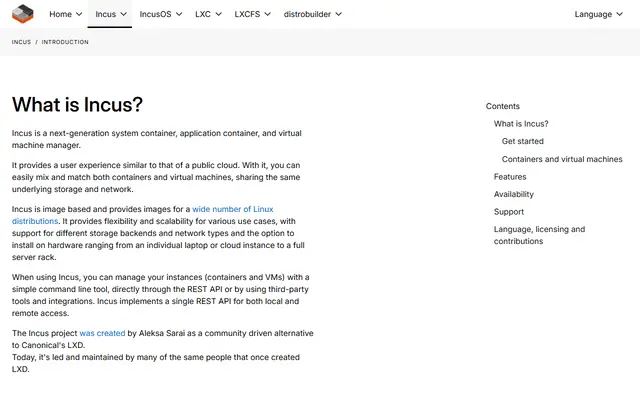 | Incus | Open source | n/a | n/a | unconfirmed |
 | KubeVirt | Open source | n/a | #182,134 | unconfirmed |
 | Lima | Open source | n/a | #380,099 | seen in search |
Self-hosted alternatives to VMware (4)
Software you run on your own server or computer. You keep control of the data and the uptime, and you take on updates, backups and security. For VMware, this list contains 4 entries in this group, including Xen Orchestra, Ceph, LINBIT (DRBD/LINSTOR) and Open Virtual Network (OVN). See all self-hosted alternatives across every product →
Choosing among self-hosted alternatives to VMware
Self-hosted components replace single layers. Our data names four. Xen Orchestra is a web console for XCP-ng and replaces vCenter, and LINBIT with DRBD and LINSTOR is replicated storage in place of vSAN; both were seen in search. Ceph, distributed storage, and Open Virtual Network, a replacement for NSX, were not confirmed. See the self-hosted hub. These pieces are useful when you want to replace only part of a VMware stack, but assembling them is a project in itself.
| Site | Name | Type | Founded | Majestic rank | Check |
|---|---|---|---|---|---|
 | Xen Orchestra | Self-hosted | n/a | #316,063 | seen in search |
 | Ceph | Self-hosted | n/a | #52,235 | unconfirmed |
 | LINBIT (DRBD/LINSTOR) | Self-hosted | n/a | #48,627 | seen in search |
 | Open Virtual Network (OVN) | Self-hosted | n/a | n/a | unconfirmed |
Regional and local alternatives to VMware (11)
Vendors that are strongest in a particular country or region: local languages, local payment methods, local data-residency rules and local support hours. For VMware, this list contains 11 entries in this group, including zVirt (Orion soft), Basis Dynamix, HostVM, Rosplatforma and Skala-R. See all regional alternatives across every product →
Choosing among regional alternatives to VMware
Regional vendors are tied to home markets. Our data lists eleven. From Russia, zVirt, Basis Dynamix, HostVM, Rosplatforma and Skala-R were seen in search, while VMmanager, SpaceVM and Brest were not confirmed. From China, Sangfor HCI and Huawei FusionCompute are unconfirmed. OVHcloud, rank 297, is the European provider. See the regional hub. Basis Dynamix is listed as a replacement for VMware and Citrix, though an expert saw flaws in it, and Skala-R is mentioned in lists with few details found. Treat thin entries cautiously and verify them directly with the vendor.
| Site | Name | Type | Founded | Majestic rank | Check |
|---|---|---|---|---|---|
| zVirt (Orion soft) | Regional · Russia | n/a | n/a | seen in search | |
| Basis Dynamix | Regional · Russia | n/a | n/a | seen in search | |
| HostVM | Regional · Russia | n/a | n/a | seen in search | |
| Rosplatforma | Regional · Russia | n/a | n/a | seen in search | |
| Skala-R | Regional · Russia | n/a | n/a | seen in search | |
| VMmanager (ISPsystem) | Regional · Russia | n/a | n/a | unconfirmed | |
| SpaceVM (Garda) | Regional · Russia | n/a | n/a | unconfirmed | |
| Brest | Regional · Russia | n/a | n/a | unconfirmed | |
 | Sangfor HCI | Regional · China | n/a | #62,087 | unconfirmed |
| Huawei FusionCompute | Regional · China | n/a | n/a | unconfirmed | |
 | OVHcloud | Regional · Europe | n/a | #297 | seen in search |
Built-in features of platforms you already use to VMware (3)
Capabilities that already ship inside a suite or platform you pay for. They rarely match a specialist tool feature for feature, but they cost nothing extra. For VMware, this list contains 3 entries in this group, including Linux KVM/QEMU, Azure Virtual Desktop and Amazon WorkSpaces. See all built-in alternatives across every product →
Choosing among built-in alternatives to VMware
Built-in options come bundled with cloud platforms. Our data lists three. Azure Virtual Desktop replaces Horizon inside Microsoft 365, and Amazon WorkSpaces replaces Horizon in AWS; both were seen in search. Linux KVM and QEMU, the hypervisor in the Linux kernel, was not confirmed. See the built-in hub. They fit organisations already committed to a public cloud and only need the desktop part replaced; they are not a path for running your own servers.
Adjacent tools to VMware (6)
Products that cover part of the job or approach it from another angle. Useful when you only need a slice of the original product. For VMware, this list contains 6 entries in this group, including Citrix DaaS, Parallels RAS, Parallels Desktop, Leostream and Nerdio. See all adjacent alternatives across every product →
Choosing among adjacent alternatives to VMware
Adjacent products cover virtual desktops and networking. Our data lists six. Citrix DaaS, Parallels RAS, Parallels Desktop, Leostream and Nerdio were seen in search; Cisco ACI, a network fabric, was not confirmed. Parallels Desktop replaces Fusion on a Mac and is paid. See the adjacent hub. Leostream brokers connections for virtual desktops (founded 2002) and Nerdio manages Azure Virtual Desktop (founded 2005). Citrix, founded in 1989, ranks 1,415.
| Site | Name | Type | Founded | Majestic rank | Check |
|---|---|---|---|---|---|
 | Citrix DaaS | Adjacent | 1989 | #1,415 | seen in search |
 | Parallels RAS | Adjacent | n/a | #659 | seen in search |
| Parallels Desktop | Adjacent | n/a | #659 | seen in search |
 | Leostream | Adjacent | 2002 | #747,652 | seen in search |
 | Nerdio | Adjacent | 2005 | #267,116 | seen in search |
 | Cisco ACI | Adjacent | 1984 | #326 | unconfirmed |
DIY and self-made approaches to VMware (1)
Spreadsheets, scripts and workflows you assemble yourself. Cheap and flexible for small needs, but they depend on whoever built them. For VMware, this list contains 1 entry in this group, including KVM+libvirt+virt-manager. See all diy alternatives across every product →
Choosing among DIY alternatives to VMware
The DIY type has one entry: KVM with libvirt and virt-manager, a do-it-yourself Linux stack without a vendor support contract. It was not confirmed in our review. It suits teams with strong Linux skills. See the DIY hub. Expect to build your own backup, monitoring and high-availability around it. That is a good fit for small labs and a poor one for regulated production without skilled staff.
| Site | Name | Type | Founded | Majestic rank | Check |
|---|---|---|---|---|---|
| KVM+libvirt+virt-manager | DIY | n/a | n/a | unconfirmed |
Migration checklist: moving away from VMware
Treat a migration as a project with an inventory, a pilot and a rollback plan. Start by listing every virtual machine, its owner, its dependencies, its operating system and its storage and network needs. Group machines by risk, and move low-risk ones first. Test conversion on a copy, then check boot, drivers, network settings and application behaviour before touching production.
Do not forget the surrounding tools. Backup software, monitoring agents, disaster recovery plans and automation scripts are often tied to VMware interfaces and need new integrations. Keep the old environment running until the new one has handled a full business cycle, and watch licence end dates so you do not pay for two platforms longer than needed. For monitoring on the new platform, see the PRTG page.
- Inventory machines, owners, dependencies, storage and network settings.
- Identify which VMware components you use: vSphere, vSAN, NSX, Horizon or desktop tools.
- Pilot the conversion on a test copy and check drivers and boot.
- Verify backup, monitoring and disaster recovery integrations.
- Plan network and storage changes before moving workloads.
- Move in waves, starting with low-risk machines.
- Keep rollback available until the new platform survives a full cycle.
- Align renewal dates so that overlap costs stay short.
Mistakes to avoid when switching
The most common mistake is replacing the hypervisor without planning for storage and networking, which are often tied to the same vendor. Another is trusting a single price comparison: published price figures in our sources are unverified, so request current quotes. Teams also underestimate the retraining needed for new consoles and the effort of rebuilding automation. Finally, do not overlook desktop users: laptop tools and virtual desktop services are separate decisions with separate timelines.
- Planning only for the hypervisor and forgetting storage and networking.
- Relying on unverified price figures instead of current quotes.
- Skipping a pilot and discovering driver problems in production.
- Neglecting backup and monitoring integrations.
- Treating an unconfirmed entry as a safe bet.
What the public data says about these alternatives
Our data holds 50 alternatives: 34 seen in search and 16 unconfirmed. By type the largest groups are regional (11) and open-source (10), then direct (7), adjacent (6), free (4), self-hosted (4), enterprise (3), built-in (3), budget (1) and DIY (1). VMware was founded in 1998, with Majestic rank 632.
Among alternatives, OVHcloud ranks 297, Red Hat 250, Amazon Web Services 156 and Oracle 87, while Microsoft's domain ranks 9. Parallels sits at 659 and Proxmox VE at 3,650. At the lower end, SUSE Harvester ranks 664,278 and VergeOS 833,097. The oldest founding years include Microsoft in 1975 and Cisco in 1984. Ten regional entries carry a Russia or China label. Treat these as prominence signals, not quality scores. See the methodology page.
Frequently asked questions
What is the best free alternative to VMware?
For laptops, VirtualBox, UTM, VirtualBuddy and MacVisor were seen in search as free tools. For servers, open-source platforms such as Proxmox VE and XCP-ng carry no licence fee but need your own support effort. Check licence terms on each project page. Always verify licence terms on the project page.
Is there an open-source alternative to VMware?
Yes. Proxmox VE is described as the most frequent replacement for ESXi, and XCP-ng, oVirt, OpenNebula, Apache CloudStack and SUSE Harvester were seen in search. OpenStack, Incus and KubeVirt are listed but unconfirmed. Plan for your own support, upgrades and monitoring. Check support options first.
Why are people leaving VMware?
Public sources describe rising licence prices after Broadcom bought VMware, though those figures come from vendor blogs and are unverified. Other reasons are packaging, vendor dependence and the wish for local suppliers. VMware itself has not been closed. Ask vendors for current quotes and compare total cost over several years.
What replaces VMware Horizon?
Our data lists Azure Virtual Desktop, Amazon WorkSpaces, Citrix DaaS, Parallels RAS, Leostream and Nerdio. Horizon belonged to the end-user computing division that was separated into Omnissa, according to trade press cited in our data. Test connection quality and user experience with a pilot group first.
What replaces VMware Workstation or Fusion?
VirtualBox replaces them on PCs, UTM on Apple Silicon Macs, and Parallels Desktop is a paid Mac client. Sources say Workstation Pro and Fusion became free, but licence terms should be checked with the vendor. Confirm current licence terms on the vendor site before relying on a free desktop product.
Which alternative replaces vSAN or NSX?
StarWind and LINBIT replace vSAN in smaller setups, and Ceph is an unconfirmed distributed option. Open Virtual Network and Cisco ACI are listed for networking but unconfirmed. VergeOS bundles roles of vSphere, vSAN and NSX. Check minimum node counts and hardware requirements for each option.
Are there alternatives from Russia or China?
Yes. zVirt, Basis Dynamix, HostVM, Rosplatforma and Skala-R from Russia were seen in search. Sangfor HCI and Huawei FusionCompute from China are unconfirmed. Check legal and export rules for your own country. Legal and procurement rules differ by country, so seek local advice. Ask each vendor directly.
Can I migrate virtual machines directly?
Often yes, but it depends on the target. XCP-ng offers conversion in Xen Orchestra and zVirt has built-in migration, per our data, while Apache CloudStack lists VM migration from vSphere. Test conversion on a copy before production. Verify conversion on a sample machine and keep the original until tests pass.
Bottom line
VMware remains a heavily linked, actively sold product family, and the reasons to look elsewhere are specific: cost, packaging, vendor dependence or the need for a local supplier. Match the type to the component you want to replace and the shortlist shrinks quickly. Because VMware is many products, no single alternative covers all of them.
A practical plan has three names: a direct platform for servers such as Hyper-V, Nutanix AHV or Proxmox VE, a desktop service if you use Horizon, and a free tool for laptops. Pilot first, keep rollback ready and request current quotes. Continue with the cloud hosting category or the DigitalOcean page.
More alternatives pages related to VMware

Explore more in Cloud, Hosting & Infrastructure
Virtual servers, hosting providers, virtualization and edge networks. Browse the full Cloud, Hosting & Infrastructure hub, or jump to a related comparison: DigitalOcean, Ultahost.