DigitalOcean alternatives: 50 cloud options compared by type
DigitalOcean is a developer-focused cloud provider. According to our data it was founded in 2011, is headquartered in the United States, and its domain sits at Majestic rank 667. Many small teams start there because the idea of renting a virtual server and getting on with the work is easy to grasp. The same teams often come back to the question of whether another provider would fit better as their projects grow, shrink or move to a different country.
This page lists 50 alternatives and sorts them into nine types: direct clouds, budget-friendly hosts, a free tier, enterprise-grade platforms, open-source stacks, self-hosted panels, regional providers, built-in platform services and adjacent app platforms. Each type answers a different reason for leaving. Someone chasing a lower bill needs a different shortlist from a team that wants to run its own control panel or one that needs a data centre in a specific country.
Everything here rests on public sources reviewed in November 2026. We did not run hands-on trials, and we do not quote prices, regions or feature lists, because those change often and are not part of our data. What we offer is a structured map of who the alternatives are, where they come from and how prominent their domains are. Use it to build a shortlist, then confirm current plans on each vendor site. The wider cloud hosting category shows how these providers relate.
DigitalOcean is available at digitalocean.com. Public records list DigitalOcean as founded in 2011. Its headquarters country is recorded as United States. Its domain ranks #667 in the Majestic Million, a free public list of the most-linked-to domains on the web. Its domain ranks #606 in the Tranco list of the most visited domains.
This page lists 50 alternatives to DigitalOcean, spread across 9 types: direct (10), budget (6), free (1), enterprise (5), open source (8), self-hosted (3), regional (11), built-in (2), adjacent (4).
50 of the 50 entries were seen in live web search results during our November 2026 review; the remaining entries are labelled unconfirmed so you know where extra checking is needed.
Regional options cover India, Russia, Switzerland, Italy, Asia.
- Direct: 10 (20%)
- Budget: 6 (12%)
- Free: 1 (2%)
- Enterprise: 5 (10%)
- Open source: 8 (16%)
- Self-hosted: 3 (6%)
- Regional: 11 (22%)
- Built-in: 2 (4%)
- Adjacent: 4 (8%)
50 of 50 entries (100%) were seen in live search results during our review; the rest are labelled “unconfirmed” and should be checked on the vendor site.
Quick comparison: the closest alternatives to DigitalOcean
| Site | Name | Type | Founded | Majestic rank | Check |
|---|---|---|---|---|---|
 | Linode (Akamai Cloud) | Direct | 2003 | #3,167 | seen in search |
| Vultr | Direct | n/a | #5,054 | seen in search | |
 | Hetzner | Direct | 1997 | #619 | seen in search |
| Kamatera | Direct | n/a | #123,608 | seen in search | |
 | OVHcloud | Direct | n/a | #297 | seen in search |
What is DigitalOcean and why do people look for alternatives?
DigitalOcean is an infrastructure provider for developers and small businesses: you rent virtual machines and related services rather than buying hardware. In our data it was founded in 2011, has its headquarters in the United States, and carries a Majestic rank of 667 and a Tranco rank of 606, which makes it one of the more widely referenced hosting domains in the sources we used.
People look elsewhere for a handful of recurring reasons. The first is price comparison: a low-cost host or a European provider may undercut the plan you are on, and it is worth checking current offers. The second is geography. A team serving customers in one country may need servers in that country for latency or legal reasons, and not every provider covers every region. The third is scale. A project that outgrows simple virtual machines may need managed databases, identity controls and compliance paperwork that large platforms are built around.
Others want less infrastructure, not more. Developers who only need to deploy an application often prefer a platform that builds and runs the code for them. Some want the opposite: a self-hosted panel on a cheap server so that deployment tooling stays under their control. Finally, a few are simply consolidating vendors, moving everything to the cloud their company already pays for. Read on for how we compiled the list and how to choose among the types.
How we built this list
The list was compiled in November 2026 from public sources only: the Majestic Million ranking, the Tranco list, Wikidata for founding years and headquarters, and a manual review of public web search results. The methodology page gives licences and limits.
Each entry is either seen in search, meaning we found it presented as an alternative or competitor, or unconfirmed, meaning it is in our source data but could not be matched in the review. All 50 entries here were seen in search, so none are flagged unconfirmed. We group entries into types because the word alternative hides very different trade-offs, starting with direct alternatives and budget-friendly alternatives. Inclusion is not paid for and we do not rank by quality.
How to choose a DigitalOcean alternative
Begin with the workload rather than the brand. A static site, a small database-backed application and a fleet of containers have very different needs, and the right provider for one is rarely the right one for another. Write down how many servers you run, how much traffic leaves them, which databases you depend on and who operates the system day to day.
Then look at the operating model. Raw virtual machines give maximum control and the most chores: updates, backups, firewalls and monitoring are yours. Platform services take those chores away but lock you into the platform's deployment method. Enterprise clouds add a large service catalogue and strict permissions that smaller teams may never use. If you plan to run your own panel, see our guide to self-hosted options; if you want a large vendor with formal procurement, see enterprise-grade options. Weigh these criteria:
- Location: confirm the provider has data centres in the countries where your users and your legal obligations are.
- Pricing model: compare how compute, storage, bandwidth and backups are billed, not only the headline server price.
- Managed services: check whether databases, load balancers and object storage are offered or must be self-run.
- Portability: prefer standard images, containers and open tooling so a later move is cheap.
- Support and reliability: read status pages, support channels and service terms before committing production.
- Team skills: pick the operating model your team can actually maintain at three in the morning.
Quick picks by situation
For the nearest like-for-like swap, start with the direct group: Linode (Akamai Cloud), Vultr, Hetzner, Scaleway and UpCloud all sell virtual servers in the same spirit. Hetzner is German and Scaleway French, which helps if you want European hosting. For a shared-hosting-style budget, look at IONOS, Hostinger VPS, Bluehost and HostGator.
For large organisations with procurement and compliance needs, AWS, Google Cloud Platform, Microsoft Azure, IBM Cloud and Oracle Cloud are the enterprise names in our data. If you only want to experiment at no cost, Oracle Cloud Free Tier is the single free entry. Teams who would rather not manage servers at all should read about Render, Fly.io, Railway and Northflank, or the edge services from Cloudflare.
Tinkerers who like owning the stack can run Coolify, Dokploy or Easypanel on their own server, or build on Proxmox VE and OpenStack. Teams in Russia can look at Timeweb Cloud, Selectel and Yandex Cloud, and teams in India at E2E Networks. If your actual job is server management in the datacentre, the VMware page is a better starting point.
All 50 alternatives to DigitalOcean by type
Direct alternatives to DigitalOcean (10)
Products that solve the same core problem for the same kind of buyer. Switching usually means moving data and retraining people, not changing how you work. For DigitalOcean, this list contains 10 entries in this group, including Linode (Akamai Cloud), Vultr, Hetzner, Kamatera and OVHcloud. See all direct alternatives across every product →
Choosing among direct alternatives to DigitalOcean
Direct alternatives sell the same thing: virtual servers by the hour or month. Our data lists ten, all seen in search. Linode (Akamai Cloud), founded in 2003 and based in the United States, and Vultr are well-known developer clouds. Hetzner, founded in 1997 in Germany, has Majestic rank 619, and OVHcloud sits at 297. Scaleway, founded in 2000 in France, plus UpCloud, Kamatera, Atlantic.net (founded 1994), Servers.com and Rackspace Spot complete the group. Compare data-centre locations and billing rules rather than headlines; the direct hub covers the type.
| Site | Name | Type | Founded | Majestic rank | Check |
|---|---|---|---|---|---|
| Linode (Akamai Cloud) | Direct | 2003 | #3,167 | seen in search |
| Vultr | Direct | n/a | #5,054 | seen in search | |
| Hetzner | Direct | 1997 | #619 | seen in search |
| Kamatera | Direct | n/a | #123,608 | seen in search | |
| OVHcloud | Direct | n/a | #297 | seen in search |
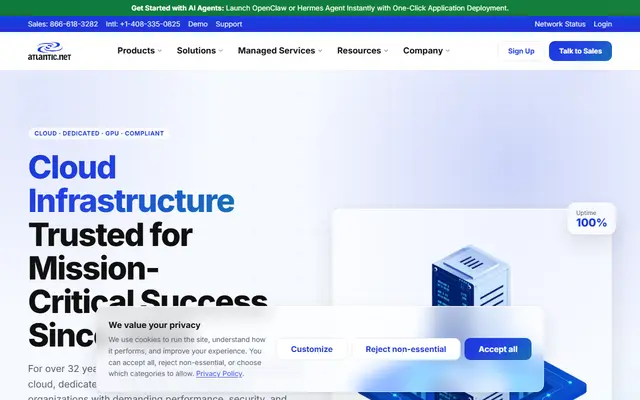 | Atlantic.net | Direct | 1994 | #30,358 | seen in search |
| Servers.com | Direct | n/a | n/a | seen in search | |
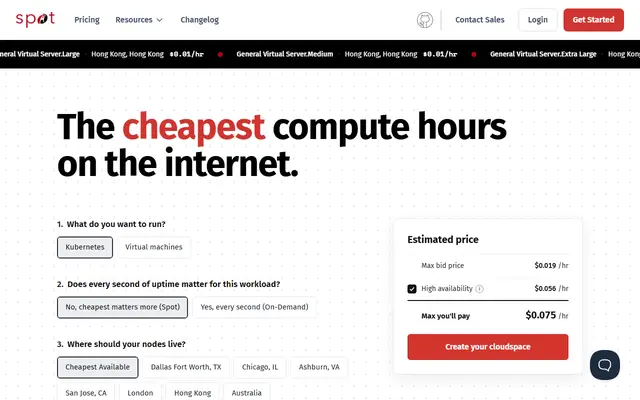 | Rackspace Spot | Direct | n/a | n/a | seen in search |
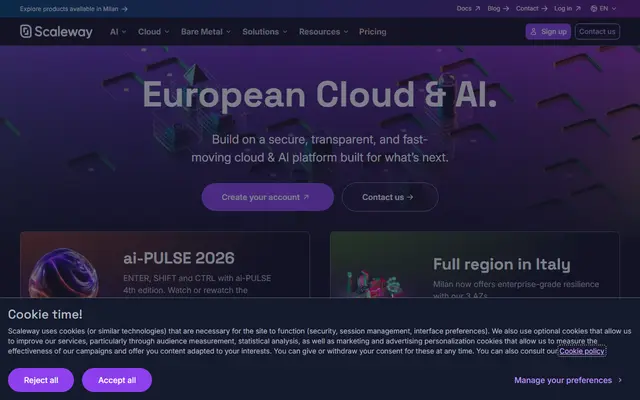 | Scaleway | Direct | 2000 | #6,604 | seen in search |
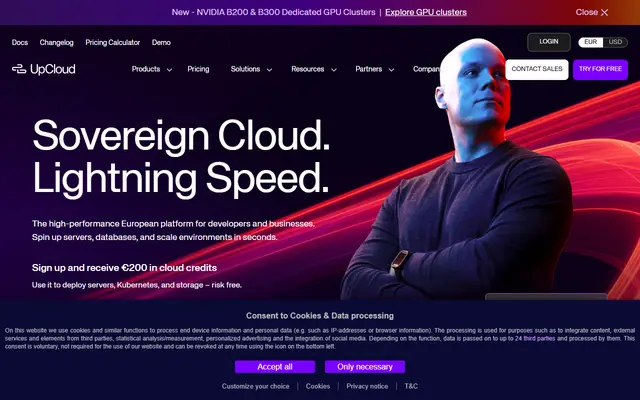 | UpCloud | Direct | n/a | #44,207 | seen in search |
Budget-friendly alternatives to DigitalOcean (6)
Lower-cost tools that cover the essential jobs without the full feature surface. A good fit when you pay for seats or features you rarely open. For DigitalOcean, this list contains 6 entries in this group, including Hostwinds, IONOS, Hostinger (VPS), Bluehost and HostGator. See all budget alternatives across every product →
Choosing among budget-friendly alternatives to DigitalOcean
Budget-friendly options trade breadth for price. Our data names six: Hostwinds, IONOS (founded 1988, Germany), Hostinger VPS (founded 2004, Lithuania), Bluehost (founded 1996), HostGator (founded 2002) and Cloudzy. Several come from the shared-hosting world, which means they fit simple sites better than complex clusters. Read the fine print on bandwidth, backups and support, ask how many servers a plan really allows, and see the budget hub for the type as a whole.
| Site | Name | Type | Founded | Majestic rank | Check |
|---|---|---|---|---|---|
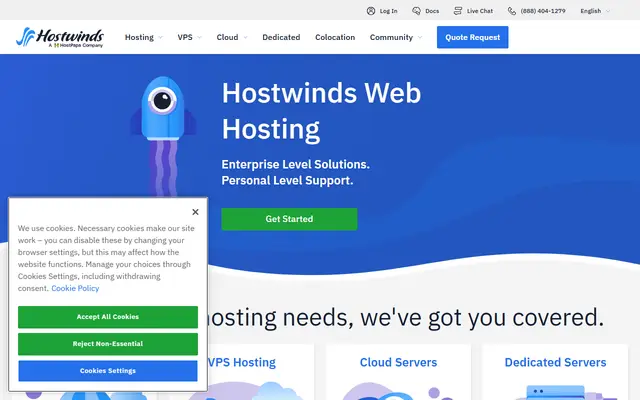 | Hostwinds | Budget | n/a | #24,310 | seen in search |
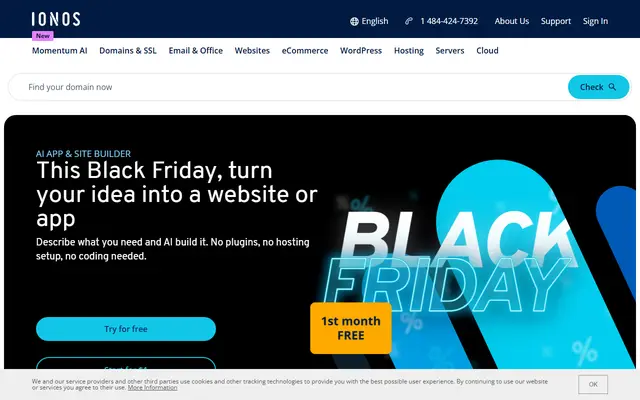 | IONOS | Budget | 1988 | #2,829 | seen in search |
 | Hostinger (VPS) | Budget | 2004 | #791 | seen in search |
 | Bluehost | Budget | 1996 | #1,141 | seen in search |
| HostGator | Budget | 2002 | #3,023 | seen in search | |
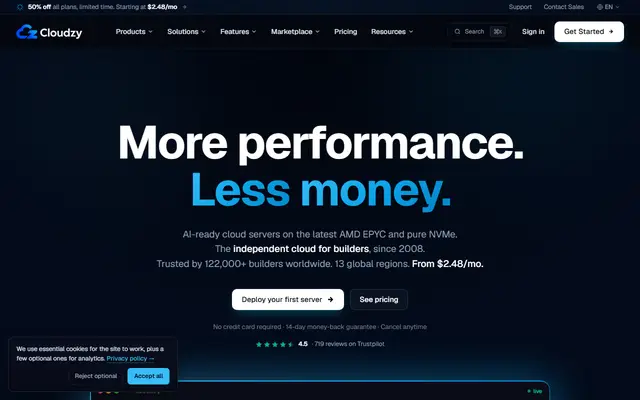 | Cloudzy | Budget | n/a | #152,565 | seen in search |
Free options to DigitalOcean (1)
Tools with a free plan or free access that is usable on its own. Limits on volume, users or history usually apply, so check them before you commit. For DigitalOcean, this list contains 1 entry in this group, including Oracle Cloud Free Tier. See all free alternatives across every product →
Choosing among free alternatives to DigitalOcean
The free type has one entry in our data: Oracle Cloud Free Tier, linked to a company founded in 1977 in the United States, with a domain at Majestic rank 87. It suits learning, tutorials and small experiments. Check the current limits on the vendor site, and plan an exit path before relying on any free allowance for production, because allowances change and idle resources can be reclaimed. Free tiers rarely include support. The free hub lists other no-cost options across categories.
| Site | Name | Type | Founded | Majestic rank | Check |
|---|---|---|---|---|---|
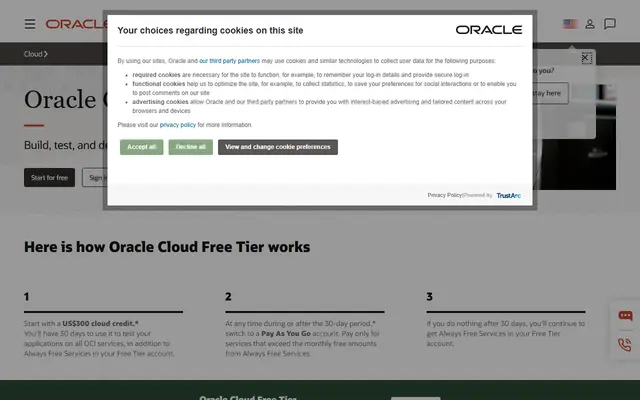 | Oracle Cloud Free Tier | Free | n/a | n/a | seen in search |
Enterprise-grade alternatives to DigitalOcean (5)
Platforms built for large teams: governance, audit trails, integrations and support contracts. They tend to cost more and take longer to roll out. For DigitalOcean, this list contains 5 entries in this group, including AWS, Google Cloud Platform, Microsoft Azure, IBM Cloud and Oracle Cloud. See all enterprise alternatives across every product →
Choosing among enterprise-grade alternatives to DigitalOcean
Enterprise-grade clouds target large organisations. Our data lists five, all seen in search: AWS (founded 2006, Majestic rank 156), Google Cloud Platform (2008), Microsoft Azure (2010), IBM Cloud (rank 110) and Oracle Cloud (rank 87). They offer large service catalogues, which is useful when you need them and confusing when you do not. Expect sales-led contracts, complex billing and a learning curve around identity and networking. Choose them for compliance and breadth rather than simplicity. The enterprise hub discusses the type, and the VMware page covers the virtualisation side.
| Site | Name | Type | Founded | Majestic rank | Check |
|---|---|---|---|---|---|
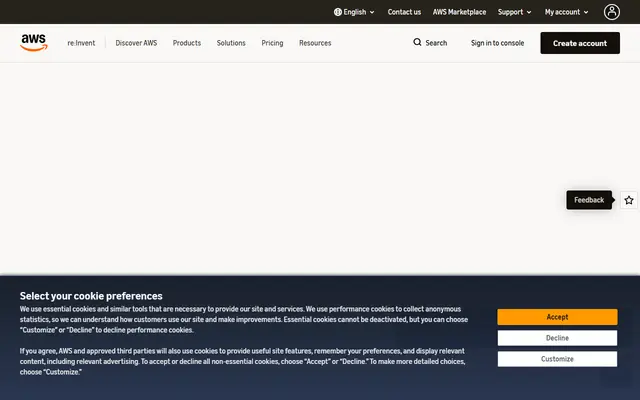 | AWS | Enterprise | 2006 | #156 | seen in search |
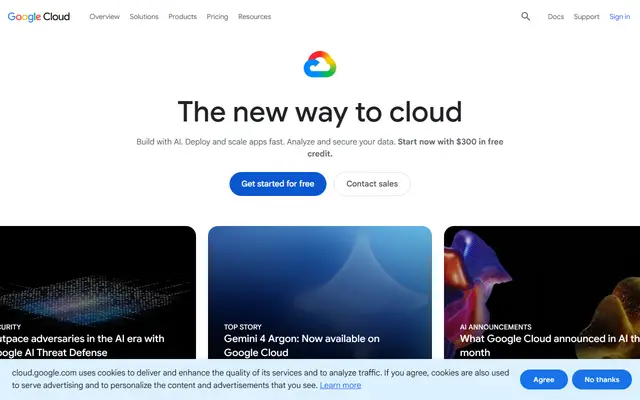 | Google Cloud Platform | Enterprise | 2008 | n/a | seen in search |
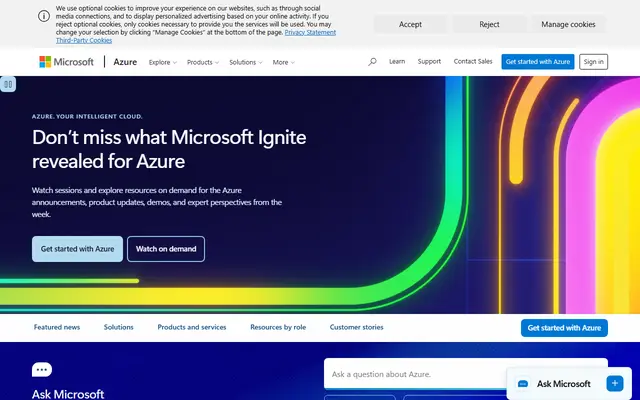 | Microsoft Azure | Enterprise | 2010 | n/a | seen in search |
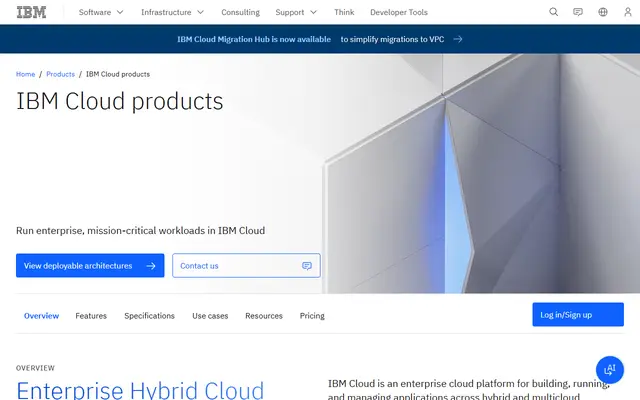 | IBM Cloud | Enterprise | n/a | n/a | seen in search |
| Oracle Cloud | Enterprise | n/a | n/a | seen in search |
Open-source alternatives to DigitalOcean (8)
Projects whose source code is public. You can inspect, modify and often self-host them, at the price of doing more of the maintenance yourself. For DigitalOcean, this list contains 8 entries in this group, including CapRover, Dokku, Kamal, Proxmox VE and OpenStack. See all open source alternatives across every product →
Choosing among open-source alternatives to DigitalOcean
Open-source options give you software to run your own cloud or deployment layer. Our data lists eight: CapRover, Dokku, Kamal, Proxmox VE, OpenStack (founded 2010), Apache CloudStack (founded 2013), OpenNebula and Cozystack. The first three suit deploying applications to a few servers; the rest target virtualisation and private clouds. Licence cost is low but effort is high, since you provide hardware or rented servers, upgrades and monitoring. See the open-source hub for more.
| Site | Name | Type | Founded | Majestic rank | Check |
|---|---|---|---|---|---|
| CapRover | Open source | n/a | n/a | seen in search | |
| Dokku | Open source | n/a | n/a | seen in search | |
| Kamal | Open source | n/a | n/a | seen in search | |
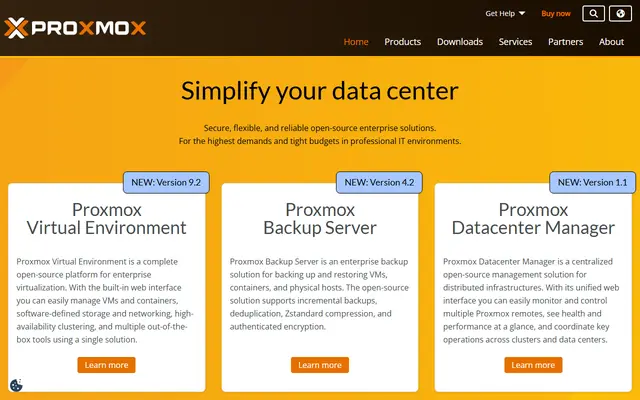 | Proxmox VE | Open source | n/a | #3,650 | seen in search |
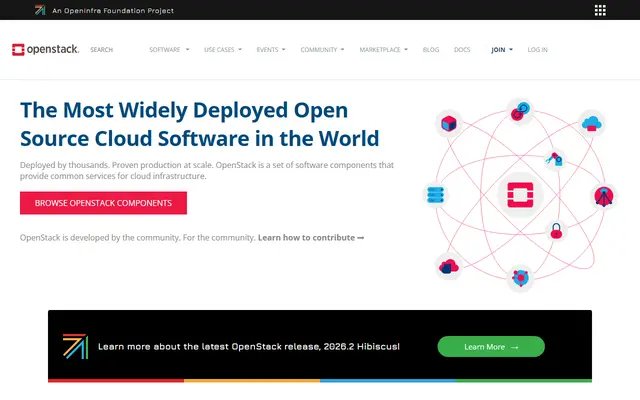 | OpenStack | Open source | 2010 | #6,306 | seen in search |
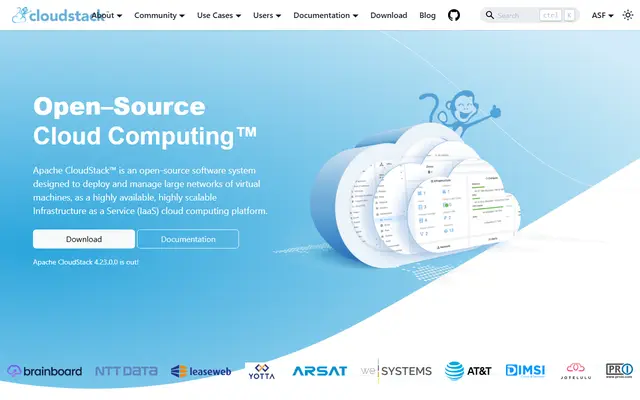 | Apache CloudStack | Open source | 2013 | n/a | seen in search |
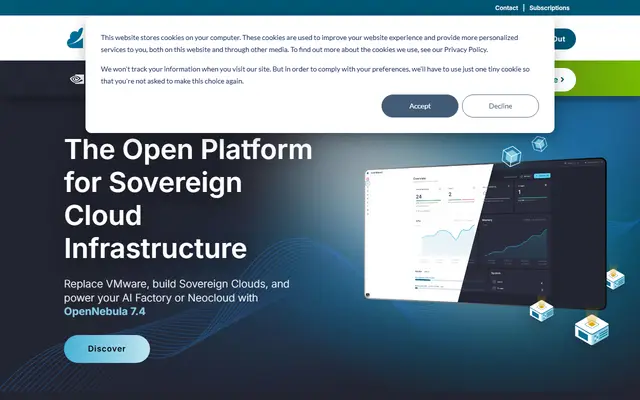 | OpenNebula | Open source | n/a | #164,837 | seen in search |
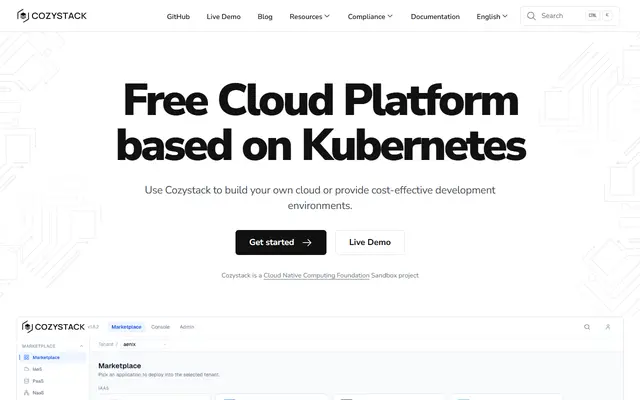 | Cozystack | Open source | n/a | n/a | seen in search |
Self-hosted alternatives to DigitalOcean (3)
Software you run on your own server or computer. You keep control of the data and the uptime, and you take on updates, backups and security. For DigitalOcean, this list contains 3 entries in this group, including Coolify, Dokploy and Easypanel. See all self-hosted alternatives across every product →
Choosing among self-hosted alternatives to DigitalOcean
Self-hosted panels turn a rented server into your own deployment platform. Our data names three: Coolify, Dokploy and Easypanel. They give a friendly interface over containers and databases, but you remain responsible for updates, backups and security of the host. Pair one with a provider from the budget or direct group, keep backups off the same machine, and read the self-hosted hub before committing production workloads.
| Site | Name | Type | Founded | Majestic rank | Check |
|---|---|---|---|---|---|
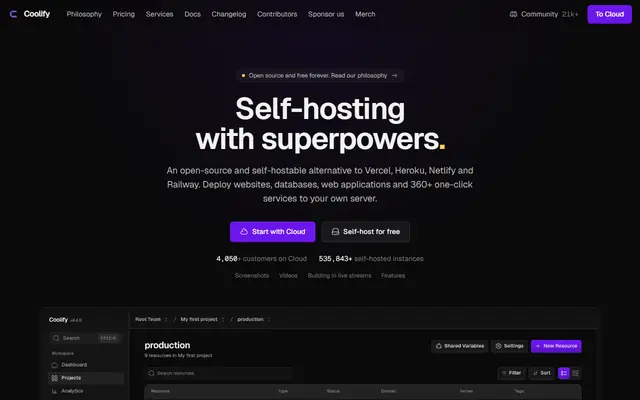 | Coolify | Self-hosted | n/a | #36,689 | seen in search |
| Dokploy | Self-hosted | n/a | n/a | seen in search | |
| Easypanel | Self-hosted | n/a | n/a | seen in search |
Regional and local alternatives to DigitalOcean (11)
Vendors that are strongest in a particular country or region: local languages, local payment methods, local data-residency rules and local support hours. For DigitalOcean, this list contains 11 entries in this group, including Onlive Server, Timeweb Cloud, Selectel, VK Cloud and Yandex Cloud. See all regional alternatives across every product →
Choosing among regional alternatives to DigitalOcean
Regional providers are anchored in a particular country or market. Our data lists eleven. In Russia: Timeweb Cloud, Selectel (founded 2008), VK Cloud, Yandex Cloud and Cloud.ru. In India: Onlive Server and E2E Networks. Exoscale is Swiss, Aruba Cloud Italian, Gcore is based in Luxembourg and Alibaba Cloud is labelled Asia. Choose regional providers for data-residency rules, local language support and payment methods, and read the regional hub for the type.
| Site | Name | Type | Founded | Majestic rank | Check |
|---|---|---|---|---|---|
| Onlive Server | Regional · India | n/a | n/a | seen in search | |
| Timeweb Cloud | Regional · Russia | n/a | n/a | seen in search | |
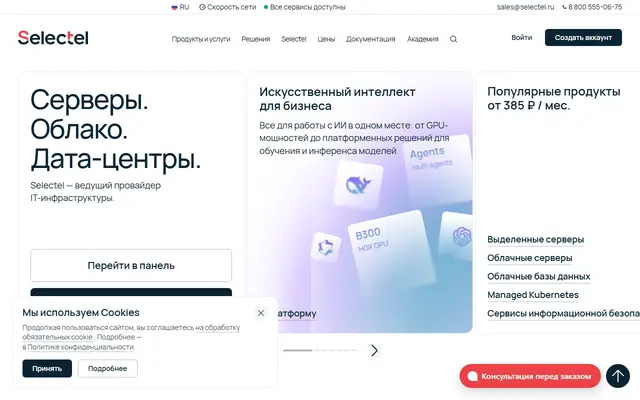 | Selectel | Regional · Russia | 2008 | #35,752 | seen in search |
| VK Cloud | Regional · Russia | n/a | n/a | seen in search | |
| Yandex Cloud | Regional · Russia | n/a | n/a | seen in search | |
| Cloud.ru | Regional · Russia | n/a | n/a | seen in search | |
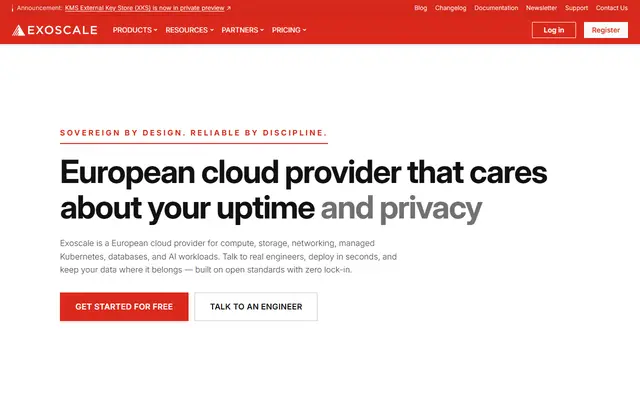 | Exoscale | Regional · Switzerland | 2011 | #65,767 | seen in search |
| Aruba Cloud | Regional · Italy | n/a | n/a | seen in search | |
 | Gcore | Regional | 2011 | #41,065 | seen in search |
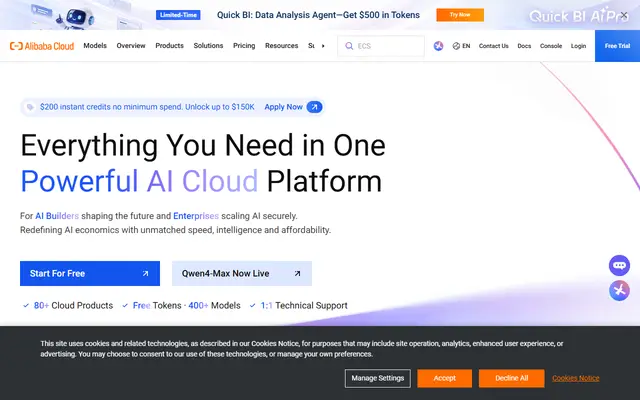 | Alibaba Cloud | Regional · Asia | 2009 | #2,949 | seen in search |
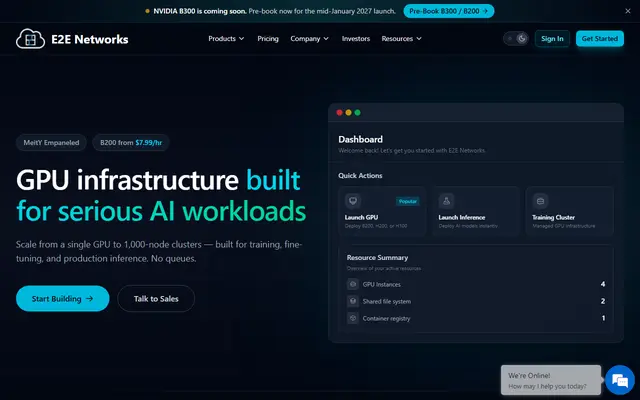 | E2E Networks | Regional · India | n/a | #354,611 | seen in search |
Built-in features of platforms you already use to DigitalOcean (2)
Capabilities that already ship inside a suite or platform you pay for. They rarely match a specialist tool feature for feature, but they cost nothing extra. For DigitalOcean, this list contains 2 entries in this group, including Cloudflare Pages and Cloudflare R2. See all built-in alternatives across every product →
Choosing among built-in alternatives to DigitalOcean
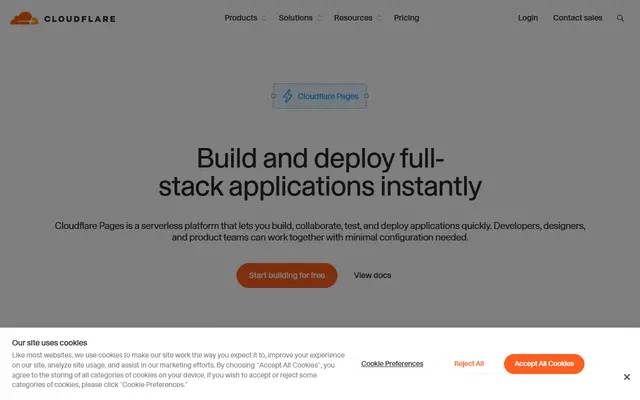
Built-in here means services bundled into a wider platform. Our data lists two from Cloudflare: Cloudflare Pages for hosting sites and Cloudflare R2 for object storage. They replace a slice of a server rather than the whole server, so they suit static sites and file storage better than long-running back ends. Read the Cloudflare page and the built-in hub if sites or storage are your main workloads.
Adjacent tools to DigitalOcean (4)
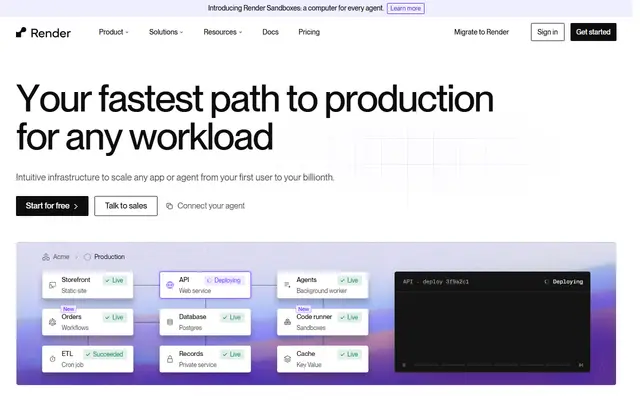
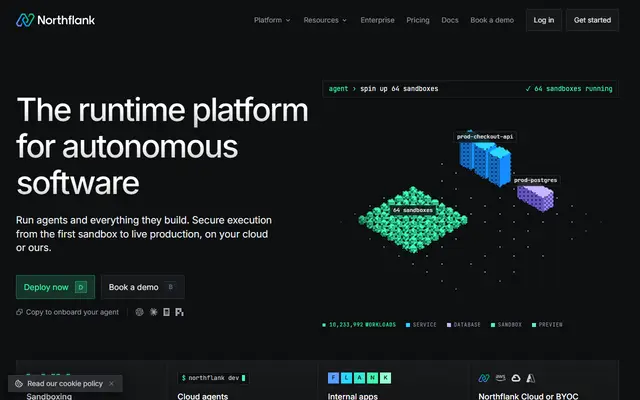
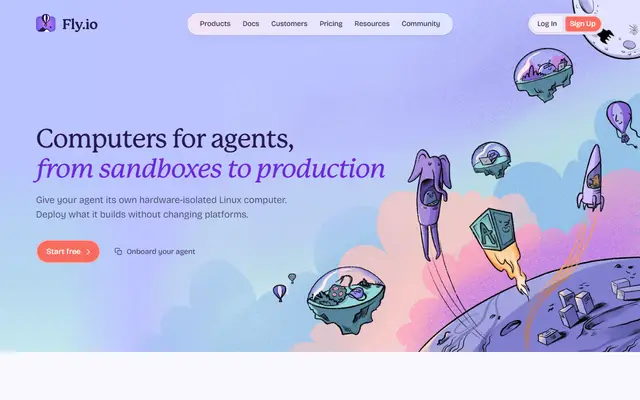
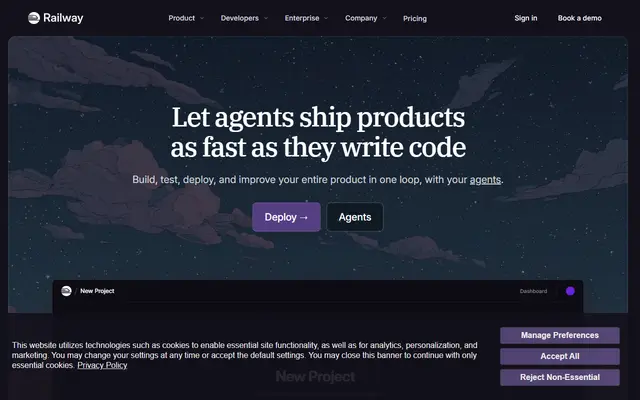
Products that cover part of the job or approach it from another angle. Useful when you only need a slice of the original product. For DigitalOcean, this list contains 4 entries in this group, including Render, Northflank, Fly.io and Railway. See all adjacent alternatives across every product →
Choosing among adjacent alternatives to DigitalOcean
Adjacent products are app platforms that run your code without you managing servers. Our data lists four: Render, Northflank, Fly.io (founded 2017, United States) and Railway. They suit developers who care about shipping features more than choosing instance sizes. The trade-off is less control over the underlying machines and, often, a different pricing model. Test how each handles databases, background jobs and scaling. See the adjacent hub for similar products.
Migration checklist: moving away from DigitalOcean
Moving servers is mostly about sequencing. Build the new environment first, copy data, test, and only then change DNS. Lower the time-to-live on your DNS records a day or two ahead so that the final switch propagates quickly, and keep the old servers running until you are confident that nothing is still sending traffic to them. Document anything that lives only in a server's configuration, because it will not follow you automatically. For another migration example see the Cloudflare page. Allow extra time for databases, since copying large datasets and confirming consistency usually takes longer than the application move itself. Agree who is on call during the cutover, and write down the exact order of steps so that anyone can repeat or reverse them.
- List every server, database, volume, firewall rule and DNS record in use.
- Take verified backups and snapshots of databases and volumes before changing anything.
- Recreate the stack on the new provider using scripts or images, not manual clicks.
- Test the application end to end, including email sending, cron jobs and certificates.
- Lower DNS time-to-live, switch records, and watch logs for stray traffic.
- Keep the old environment for a defined fallback period, then delete it and cancel billing.
Mistakes to avoid when switching
Most failures come from moving too quickly or choosing on price alone. A cheaper plan that charges separately for traffic or backups can end up costing more. Teams also forget small dependencies such as outbound mail rules, allow-listed IP addresses at partner services and monitoring agents. Another common slip is picking a provider because a tutorial used it, without checking that its regions, support hours and terms suit your business. Keep the decision tied to your own requirements. Skipping monitoring is another trap: if you leave a managed monitoring setup behind, see how tools such as Datadog or PRTG are compared on their own pages.
- Comparing server prices without counting bandwidth, backup and support costs.
- Forgetting IP allow-lists at payment, email or database partners.
- Cutting over without a rollback plan.
- Moving production before testing restore from backup.
- Treating a free tier as a long-term production home.
What the public data says about these alternatives
Our data holds 50 alternatives, all seen in search. By type the largest groups are regional (11), direct (10), open-source (8), budget (6) and enterprise (5), followed by adjacent (4), self-hosted (3), built-in (2) and free (1). DigitalOcean itself was founded in 2011 and has Majestic rank 667.
Among direct rivals, Hetzner at 619 and OVHcloud at 297 rank higher than DigitalOcean, while Oracle at 87, IBM at 110, AWS at 156 and Cloudflare at 163 rank higher still. At the other end sit E2E Networks at 354,611, OpenNebula at 164,837 and Cloudzy at 152,565. Ten entries list the United States as headquarters and five carry a Russia label. Treat these as prominence signals, not quality scores. See the methodology page.
Frequently asked questions
What is the best free alternative to DigitalOcean?
Oracle Cloud Free Tier is the only free entry in our data, and it was seen in search. Open-source tools such as Coolify or Dokku cost nothing to license but still need a server. Check current free-tier limits on the vendor site before relying on them. Always confirm limits and current terms with the provider before moving anything important. None of these replaces a paid cloud for production load.
Is there an open-source alternative to DigitalOcean?
Yes. Our data lists CapRover, Dokku, Kamal, Proxmox VE, OpenStack, Apache CloudStack, OpenNebula and Cozystack. The first three help deploy applications; the others build virtualisation or private cloud layers. They need servers and admin skills of your own. Plan for backups and monitoring yourself, because that work moves to your side.
What is the cheapest alternative to DigitalOcean?
We do not list prices. The budget group in our data includes Hostwinds, IONOS, Hostinger VPS, Bluehost, HostGator and Cloudzy. Compare bandwidth, backup and support terms on each vendor site, since headline server prices rarely tell the whole story. Look at bandwidth and backup charges as well as the monthly server fee.
Which alternative is closest to DigitalOcean?
The direct group is closest: Linode (Akamai Cloud), Vultr, Hetzner, OVHcloud, Scaleway and UpCloud all sell virtual servers to developers. Compare locations, billing rules and managed services, because those decide fit more than the brand does. Run a small proof of concept with your own application before deciding.
Can I use a European provider instead?
Yes. Our data lists Hetzner from Germany, Scaleway from France, Exoscale from Switzerland, Aruba Cloud from Italy and Gcore from Luxembourg, plus OVHcloud and IONOS. Confirm exact data-centre locations and legal terms on each vendor site. Verify data-centre cities and legal terms, since a company name alone does not settle where data is stored.
Which alternatives suit deploying apps without servers?
Render, Northflank, Fly.io and Railway are listed as adjacent app platforms, and Cloudflare Pages is a built-in option for sites. They remove much server work but give less control, so check how each handles databases and scaling. Ask how databases, background workers and scheduled jobs are handled before choosing.
Can I self-host my own deployment panel?
Yes. Coolify, Dokploy and Easypanel are the self-hosted entries in our data, and CapRover, Dokku and Kamal are open-source deployment tools. You run them on a server you rent, and you handle updates, backups and security yourself. Keep backups on a separate provider so a single account problem cannot take everything.
Are there regional providers outside the United States?
Yes: Timeweb Cloud, Selectel, VK Cloud, Yandex Cloud and Cloud.ru from Russia, Onlive Server and E2E Networks from India, and Exoscale, Aruba Cloud and Gcore in Europe. Alibaba Cloud is labelled Asia in our data. Check support languages and billing currencies in advance. Confirm support hours too.
Bottom line
DigitalOcean is a widely referenced developer cloud, and the reasons to look elsewhere are specific: price, region, scale or the wish for a different operating model. Match the type to the reason and the shortlist shrinks quickly. All 50 entries in our data were seen in search, but that confirms visibility, not fit. The nine types are different answers to different questions, so decide which question you are asking first.
A practical shortlist has three names: one direct provider such as Hetzner, Linode or Vultr, one platform or self-hosted option if you want less server work, and one large cloud as a long-term hedge. Test your real workload on each, price the whole bill, and check current terms. Continue with the cloud hosting category or the Cloudflare page.
More alternatives pages related to DigitalOcean

Where DigitalOcean shows up as an alternative
DigitalOcean appears in the alternatives lists of 1 other product: Ultahost. Comparing those lists shows which tools keep being recommended across the whole category.
Explore more in Cloud, Hosting & Infrastructure
Virtual servers, hosting providers, virtualization and edge networks. Browse the full Cloud, Hosting & Infrastructure hub, or jump to a related comparison: Ultahost, VMware.