monday.com alternatives: 47 work-management tools by type
monday.com is a cloud platform for work management, and our data also records related monday CRM, dev and service products. The company was founded in 2012 and is headquartered in Israel. Its domain sits at Majestic rank 1,281 and Tranco rank 3,213, which puts it among the more prominent project and work-management brands. A product with that reach covers many use cases, and that is why a long list of substitutes exists.
This page lists 47 alternatives and sorts them into ten types: direct competitors, budget-friendly tools, free options, enterprise-grade platforms, open-source projects, self-hosted software, regional specialists, built-in tools, adjacent products and do-it-yourself setups. Each type answers a different reason for leaving. A team that wants a close functional match needs a different shortlist from a developer group that wants an issue tracker or an organisation that must keep data on its own server.
Everything here rests on public sources reviewed in November 2026. We did not run hands-on trials, and we do not list prices or feature tables, because those change often and are not part of our data. What we offer is a structured map of who the alternatives are, where they come from and how prominent their domains are. Use it to build a shortlist, then check current plans on each vendor's own site. The wider documents and productivity category shows how related products sit together.
monday.com is available at monday.com. Public records list monday.com as founded in 2012. Its headquarters country is recorded as Israel. Its domain ranks #1,281 in the Majestic Million, a free public list of the most-linked-to domains on the web. Its domain ranks #3,213 in the Tranco list of the most visited domains.
This page lists 47 alternatives to monday.com, spread across 10 types: direct (13), budget (3), free (2), enterprise (3), open source (11), self-hosted (2), regional (5), built-in (3), adjacent (2), diy (3).
45 of the 47 entries were seen in live web search results during our November 2026 review; the remaining entries are labelled unconfirmed so you know where extra checking is needed.
Regional options cover Russia, Ukraine, Asia.
- Direct: 13 (28%)
- Budget: 3 (6%)
- Free: 2 (4%)
- Enterprise: 3 (6%)
- Open source: 11 (23%)
- Self-hosted: 2 (4%)
- Regional: 5 (11%)
- Built-in: 3 (6%)
- Adjacent: 2 (4%)
- DIY: 3 (6%)
45 of 47 entries (96%) were seen in live search results during our review; the rest are labelled “unconfirmed” and should be checked on the vendor site.
Quick comparison: the closest alternatives to monday.com
| Site | Name | Type | Founded | Majestic rank | Check |
|---|---|---|---|---|---|
 | Asana | Direct | 2011 | #1,117 | seen in search |
 | ClickUp | Direct | 2016 | #2,241 | seen in search |
 | Wrike | Direct | 2006 | #5,842 | seen in search |
 | Smartsheet | Direct | 2006 | #2,397 | seen in search |
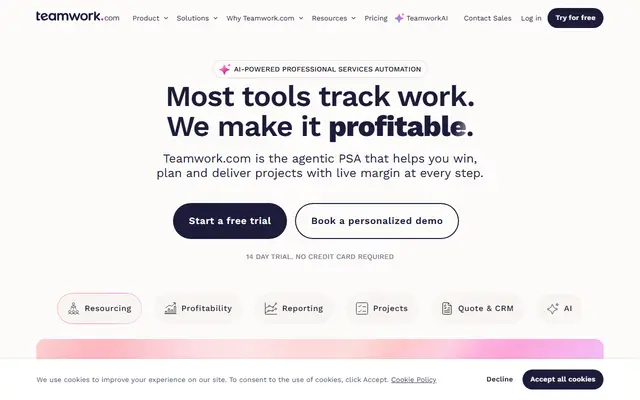 | Teamwork | Direct | 2007 | #16,681 | seen in search |
What is monday.com and why do people look for alternatives?
monday.com is described in our data as a cloud work-management platform, with related monday CRM, dev and service offerings. In general terms, products of this kind let teams plan projects, track tasks on boards and tables, assign owners, automate routine steps and report on progress. The company was founded in 2012 and is based in Israel. As of November 2026, our data describes it as an independent public company that has not been closed or renamed.
The same sources mention a few recent developments. In 2026 the company announced the purchase of a voice AI platform called OneAI, although the closing of that deal was not confirmed in what we found. Its shares are reported to have fallen sharply, a class-action lawsuit by investors has been filed, and a restructuring plan has been mentioned, with no details found. We repeat these points only as context and draw no conclusions from them. Nothing in our data says the product is being withdrawn.
People look for alternatives for a handful of recurring reasons. The first is breadth versus need: a flexible platform that handles projects, customer records and development can feel oversized when a team only wants simple task boards. The second is cost, since per-seat pricing in this category adds up with team size, which is worth checking against current plans. The third is data control. Some organisations want an open-source or self-hosted tool, and our list contains many. Others are looking at a vendor in their own region or a tool built into an office suite they already pay for.
The sections below explain how the list was compiled, how to pick a type and what to watch for during a move. If you compare several vendors in this field, the pages for ClickUp and SharePoint cover neighbouring needs from different starting points.
How we built this list
The list was compiled in November 2026 from public sources only. We combined the Majestic Million ranking for domain prominence, the Tranco list, Wikidata for founding years and headquarters where available, and a manual review of public web search results to see which products are presented as substitutes for monday.com. The methodology page describes licences and limits in full.
Each entry carries one of two statuses. Seen in search means we found the product described as an alternative or competitor in public search results during the review. Unconfirmed means it appears in our source data but we could not match it in that review; such entries are shown for completeness and are never offered as a top pick. Of the 47 entries here, 45 were seen in search and 2 are unconfirmed, namely Freedcamp and Nifty.
We sort entries into types because the word alternative hides very different trade-offs. A free-plan task board, a Gantt-based enterprise tool and a self-hosted issue tracker are all answers to the same question, but they are not interchangeable. The types have their own hub pages, starting with direct alternatives and open-source alternatives. We do not test products, rank them by quality or accept payment for inclusion.
How to choose a monday.com alternative
Start by writing down what your team actually manages in the tool. Some groups run client projects with deadlines and hours, others run a product backlog, others coordinate marketing campaigns or internal requests. If your list is short, a simpler board or tracker will probably serve better than another flexible platform. If it spans several departments and many kinds of work, a direct competitor is the more natural replacement.
Next, look at how work is structured. Some tools centre on tasks and projects with a strict hierarchy, others on tables and linked databases, others on documents with embedded tables, and others on kanban boards. According to our data, Asana is noted for tasks and projects with a strict structure, Smartsheet for spreadsheet logic, Airtable for linked databases and Coda for documents combined with tables. Pick the model that matches how your team already thinks, because forcing a different mental model is the main cause of poor adoption.
Finally, think about who will administer and pay for it. A small team needs a free or cheap plan and quick onboarding. An agency needs time tracking, client access and reporting. An enterprise needs permissions, audit trails and a vendor that will answer procurement questions. Read our guides for free alternatives and enterprise-grade alternatives if either describes you. These are the criteria worth weighing:
- Work model: boards, tables, Gantt charts, documents or issue lists, depending on how your team plans.
- Team type: agencies need time, resources and clients; development teams need sprints and issue links.
- Automation: check what can run without manual steps, and how rules are set up and limited.
- Views and reporting: look for dashboards, timelines and exports your managers actually use.
- Seats and guests: compare how members, guests and read-only users are counted, since limits are where plans differ.
- Integrations: calendar, chat, file storage and development tools can decide the choice.
- Data ownership and export: make sure you can get tasks, files and history out in a usable format.
Quick picks by situation
If you want the nearest like-for-like swap, begin with the direct group. Our data describes ClickUp as the closest replacement with more features, Asana as tasks and projects with strict structure, Wrike as strong for collaborative project work and Smartsheet as spreadsheet logic for teams used to rows. Teamwork is noted for time, resources and clients, which suits agencies, and Productive is also noted for agencies, projects and finance. Basecamp is described as simplicity and communication in one place.
If budget is the main constraint, Trello is described as simple kanban with a free plan, Zoho Projects as inexpensive projects within the Zoho ecosystem, and Kanbanchi as kanban inside Google Workspace. Notion and Bitrix24 are the two free-plan entries; Notion is noted for documents and databases and Bitrix24 for a free tier with no limit on users. If you need enterprise-grade planning, Adobe Workfront, Jira and Microsoft Project are the three entries.
If you prefer to own the stack, the open-source group is large: OpenProject, Plane, Taiga, Leantime, Kanboard, Wekan, Focalboard, Vikunja, Huly, Redmine and Planka. ONES and Kaiten are the self-hosted options. If you already pay for an office suite, Microsoft Planner, Microsoft Lists and Google Workspace are the built-in routes. Teams working in Russian-language markets may look at Planfix, Pyrus and Yandex Tracker, and those who need a simple tracker can use Google Sheets or Excel.
For deeper reading, compare the Zoho page, since Zoho Projects appears in our budget group, and the ClickUp page for the entry our data calls the closest match.
All 47 alternatives to monday.com by type
Direct alternatives to monday.com (13)
Products that solve the same core problem for the same kind of buyer. Switching usually means moving data and retraining people, not changing how you work. For monday.com, this list contains 13 entries in this group, including Asana, ClickUp, Wrike, Smartsheet and Teamwork. See all direct alternatives across every product →
Choosing among direct alternatives to monday.com
Direct alternatives are platforms that try to replace the same workflow. Our data lists thirteen, and eleven were seen in search. Asana, founded in 2011, has a Majestic rank of 1,117. ClickUp, founded in 2016 in the United States, sits at 2,241, Wrike, founded in 2006, at 5,842 and Smartsheet, also founded in 2006, at 2,397. Airtable, founded in 2012, is at 1,048, and Basecamp, founded in 2004, at 2,974.
The rest narrow the field. Teamwork, from Ireland, is noted for time, resources and clients. Hive is described as everyday team work, SmartSuite as a no-code platform with strong automation, Coda as documents and tables with hubs, and Productive as a tool for agencies. Freedcamp, a light project manager, and Nifty, covering projects, goals and documents, are unconfirmed in our review. Browse the full direct alternatives hub to compare the type as a whole.
| Site | Name | Type | Founded | Majestic rank | Check |
|---|---|---|---|---|---|
| Asana | Direct | 2011 | #1,117 | seen in search |
| ClickUp | Direct | 2016 | #2,241 | seen in search |
| Wrike | Direct | 2006 | #5,842 | seen in search |
| Smartsheet | Direct | 2006 | #2,397 | seen in search |
| Teamwork | Direct | 2007 | #16,681 | seen in search |
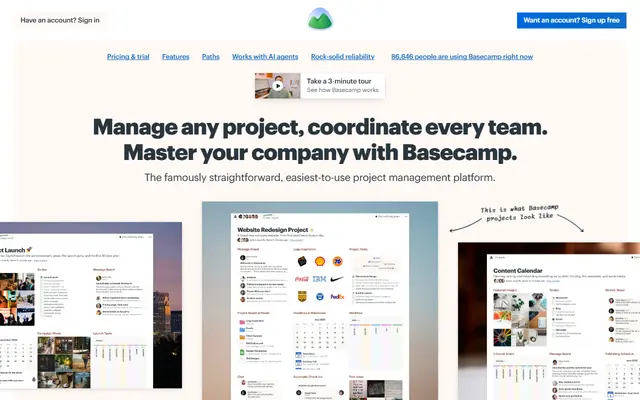 | Basecamp | Direct | 2004 | #2,974 | seen in search |
 | Airtable | Direct | 2012 | #1,048 | seen in search |
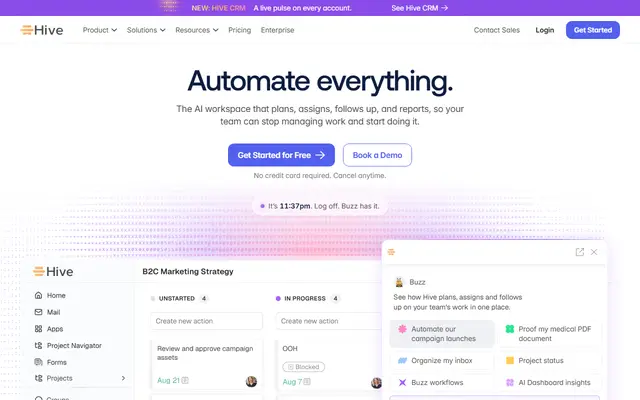 | Hive | Direct | n/a | #33,472 | seen in search |
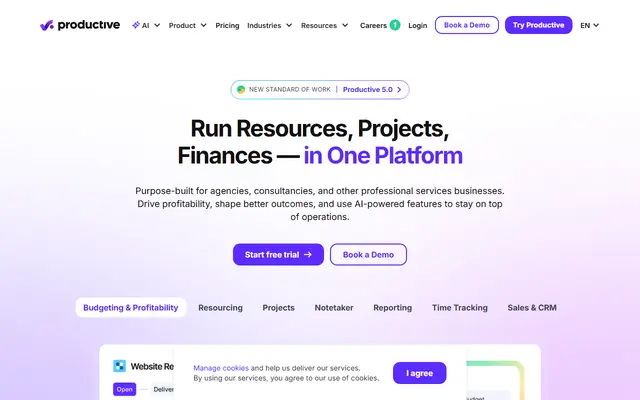 | Productive | Direct | n/a | #66,715 | seen in search |
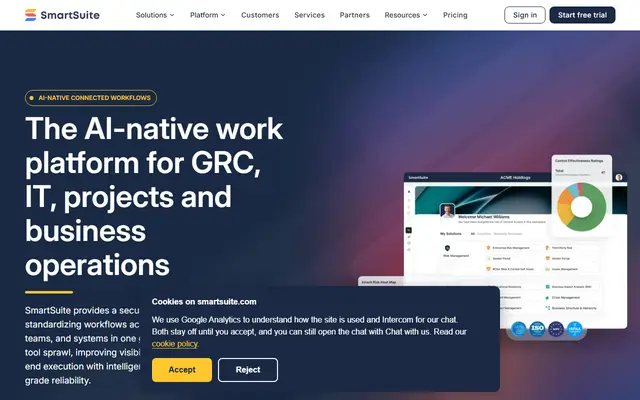 | SmartSuite | Direct | n/a | #124,245 | seen in search |
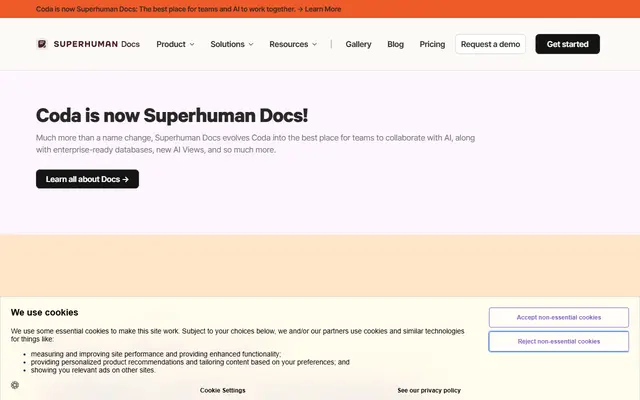 | Coda | Direct | n/a | #11,642 | seen in search |
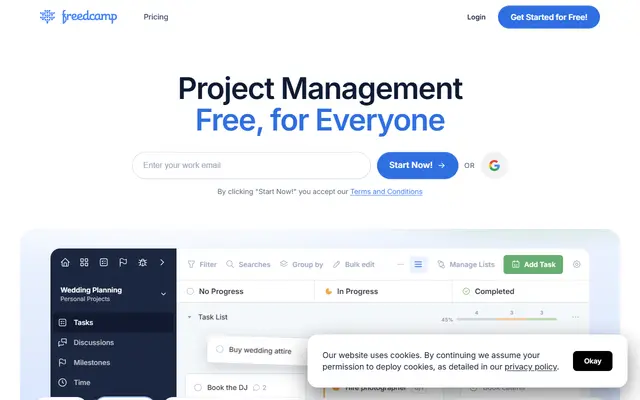 | Freedcamp | Direct | 2010 | #107,501 | unconfirmed |
 | Nifty | Direct | n/a | #65,017 | unconfirmed |
Budget-friendly alternatives to monday.com (3)
Lower-cost tools that cover the essential jobs without the full feature surface. A good fit when you pay for seats or features you rarely open. For monday.com, this list contains 3 entries in this group, including Trello, Zoho Projects and Kanbanchi. See all budget alternatives across every product →
Choosing among budget-friendly alternatives to monday.com
Budget-friendly tools trade breadth for price. Our data names three, all seen in search. Trello, founded in 2011 with a Majestic rank of 642, is described as simple kanban with a free plan. Zoho Projects, from a company founded in 1996 in India, is described as inexpensive projects within the Zoho ecosystem. Kanbanchi, at Majestic rank 498,131, is kanban inside Google Workspace.
The usual compromise is depth: fewer views, lighter automation or simpler reporting. That is acceptable for a small team and a poor fit for a large programme with dependencies and resource planning. We do not list prices, so check how each plan counts users and boards before you assume a low sticker price will stay low as you grow. Our budget alternatives hub lists more products of this kind across categories, and the Zoho page shows how a broad suite surrounds a project tool.
| Site | Name | Type | Founded | Majestic rank | Check |
|---|---|---|---|---|---|
 | Trello | Budget | 2011 | #642 | seen in search |
 | Zoho Projects | Budget | n/a | n/a | seen in search |
 | Kanbanchi | Budget | n/a | #498,131 | seen in search |
Free options to monday.com (2)
Tools with a free plan or free access that is usable on its own. Limits on volume, users or history usually apply, so check them before you commit. For monday.com, this list contains 2 entries in this group, including Notion and Bitrix24. See all free alternatives across every product →
Choosing among free alternatives to monday.com
The free type has two entries in our data, both seen in search. Notion, founded in 2016 in the United States with a Majestic rank of 810, is noted for documents and databases with a free plan. Bitrix24, founded in 2012 with a rank of 14,585, is noted for a free tier with no limit on users. We do not list the limits of either plan, so verify current terms on each vendor's site.
Free here refers to how the product is presented in public sources, not a guarantee of unlimited use. Free plans usually cap storage, automation or advanced views, and they suit small teams or trials. If your needs grow, compare what the paid plans add before you build your processes around a free tier. Other zero-cost routes exist in other groups, such as the open-source projects below. The free alternatives hub covers the type, and the ClickUp page shows how a feature-rich rival is positioned.
Enterprise-grade alternatives to monday.com (3)
Platforms built for large teams: governance, audit trails, integrations and support contracts. They tend to cost more and take longer to roll out. For monday.com, this list contains 3 entries in this group, including Adobe Workfront, Jira and Microsoft Project. See all enterprise alternatives across every product →
Choosing among enterprise-grade alternatives to monday.com
Enterprise-grade platforms target large organisations with formal procurement and many internal users. Our data lists three, all seen in search. Adobe Workfront, founded in 2001 in the United States, is described as enterprise work management. Jira, from Atlassian, founded in 2002 in Australia and with a Majestic rank of 502, is noted for development and flexible processes. Microsoft Project is described as the classic Gantt tool within the Microsoft ecosystem.
Expect sales-led buying, longer contracts and onboarding projects. These tools differ more in philosophy than in price: one centres on work-intake and portfolio planning, another on development workflows, a third on Gantt-based scheduling. Decide which of those matches your organisation, and test with a real project. The enterprise hub covers the type overall, and the SharePoint page shows how Microsoft's collaboration platform fits around Project.
| Site | Name | Type | Founded | Majestic rank | Check |
|---|---|---|---|---|---|
 | Adobe Workfront | Enterprise | 2001 | #65,405 | seen in search |
 | Jira | Enterprise | n/a | n/a | seen in search |
 | Microsoft Project | Enterprise | 1975 | #9 | seen in search |
Open-source alternatives to monday.com (11)
Projects whose source code is public. You can inspect, modify and often self-host them, at the price of doing more of the maintenance yourself. For monday.com, this list contains 11 entries in this group, including OpenProject, Plane, Taiga, Leantime and Kanboard. See all open source alternatives across every product →
Choosing among open-source alternatives to monday.com
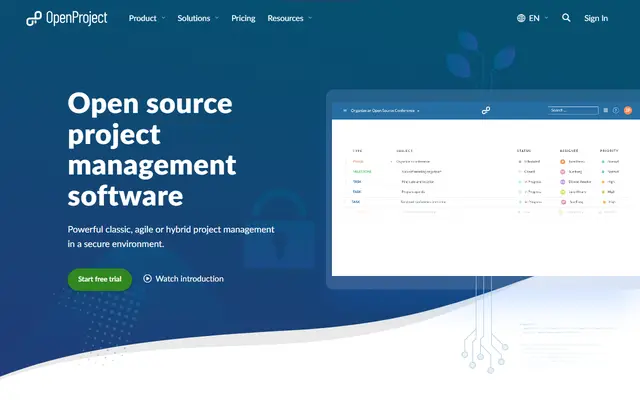
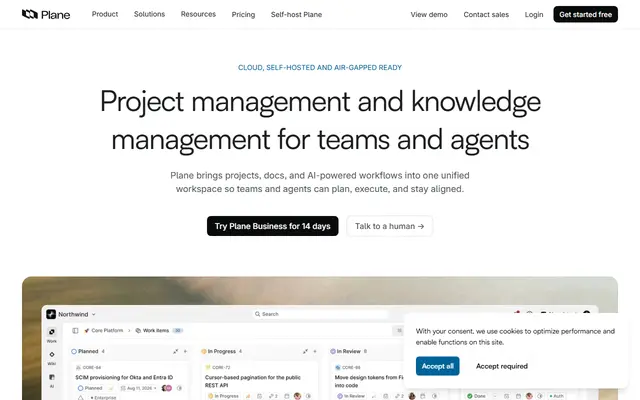
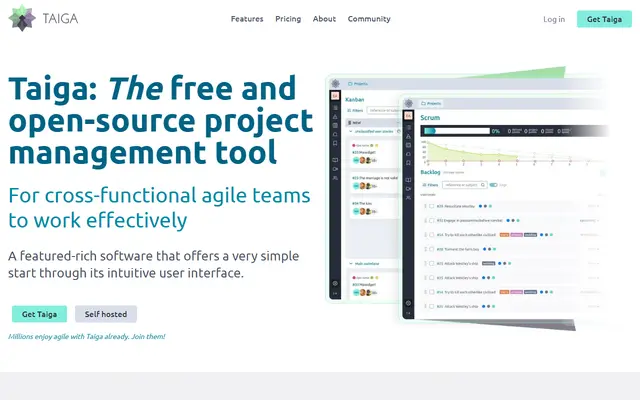
Open-source options give you code you can inspect and run yourself. This is the second-largest group in our data with eleven entries, all seen in search. OpenProject is noted for Gantt charts, resources and corporate management. Plane is described as the best replacement according to an open-source directory. Taiga covers Agile, Kanban and Scrum, Leantime goals and OKRs under the AGPL licence, and Kanboard is minimal kanban under the MIT licence.
Wekan is a Trello-style kanban board, Focalboard offers light task boards, Vikunja personal and team tasks, Huly is described as a replacement for Linear, Jira and Notion, Redmine is a classic issue tracker founded in 2006, and Planka is kanban mentioned by that open-source directory. These projects are cheap in licence terms but not in effort: you provide hosting, updates and security. They suit developers and teams that value control. See the open-source hub for the wider picture, and compare with the managed route on the ClickUp page.
| Site | Name | Type | Founded | Majestic rank | Check |
|---|---|---|---|---|---|
 | OpenProject | Open source | n/a | #19,589 | seen in search |
 | Plane | Open source | n/a | #66,258 | seen in search |
 | Taiga | Open source | n/a | #32,144 | seen in search |
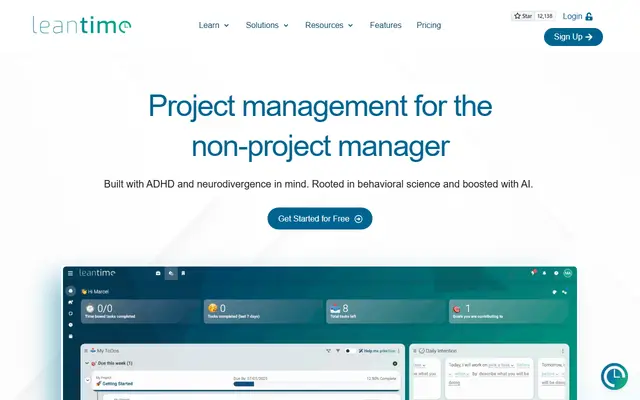 | Leantime | Open source | n/a | #255,798 | seen in search |
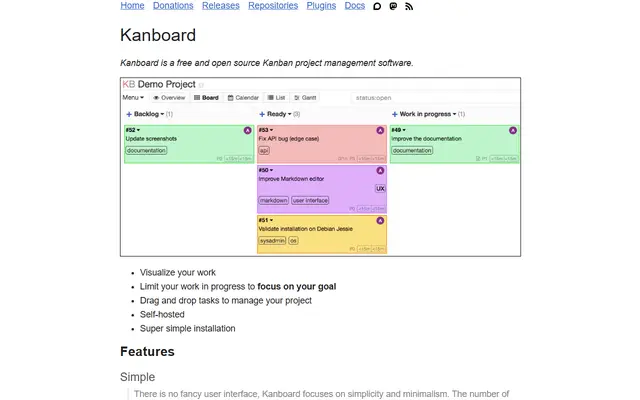 | Kanboard | Open source | n/a | #93,587 | seen in search |
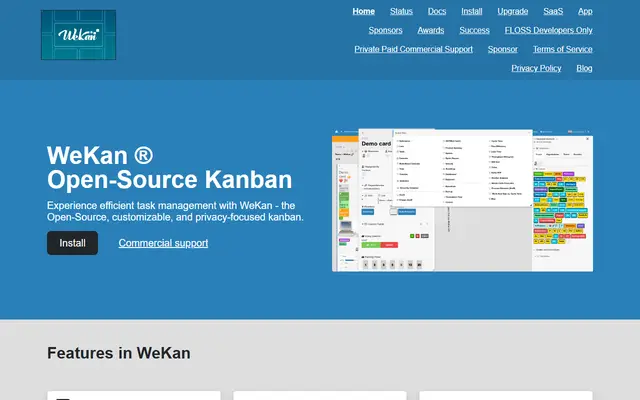 | Wekan | Open source | n/a | n/a | seen in search |
| Focalboard | Open source | n/a | #307,255 | seen in search | |
 | Vikunja | Open source | n/a | #86,351 | seen in search |
 | Huly | Open source | n/a | #360,055 | seen in search |
 | Redmine | Open source | 2006 | #4,780 | seen in search |
 | Planka | Open source | n/a | #363,457 | seen in search |
Self-hosted alternatives to monday.com (2)
Software you run on your own server or computer. You keep control of the data and the uptime, and you take on updates, backups and security. For monday.com, this list contains 2 entries in this group, including ONES and Kaiten. See all self-hosted alternatives across every product →
Choosing among self-hosted alternatives to monday.com
Self-hosted tools run on a server you control, so tasks and files stay under your policies. Our data names two, both seen in search. ONES, with a Majestic rank of 325,004, is described as free to self-host but not open source. Kaiten, at 333,189, is noted for importing from Jira and running on your own server.
Many open-source entries can also be self-hosted, which is why the two types overlap. In our classification, open-source lists projects whose code is public, while self-hosted lists tools whose defining trait is running on your machine. Note the licence difference in ONES: free to run does not mean you can inspect or modify the code. The trade-off is maintenance: you handle backups, updates and uptime. The self-hosted hub lists comparable products in other categories, and the open-source group above offers more candidates.
| Site | Name | Type | Founded | Majestic rank | Check |
|---|---|---|---|---|---|
 | ONES | Self-hosted | n/a | #325,004 | seen in search |
 | Kaiten | Self-hosted | n/a | #333,189 | seen in search |
Regional and local alternatives to monday.com (5)
Vendors that are strongest in a particular country or region: local languages, local payment methods, local data-residency rules and local support hours. For monday.com, this list contains 5 entries in this group, including Planfix, Pyrus, Yandex Tracker, Worksection and Lark (Larksuite). See all regional alternatives across every product →
Choosing among regional alternatives to monday.com
Regional tools are tied to specific markets. Our data lists five, all seen in search. Planfix, from Russia, is noted for business processes and tasks, Pyrus, also from Russia, for low-code, kanban and processes, and Yandex Tracker for being cloud-only and part of Yandex 360. Worksection is labelled Ukraine, and our data adds that new subscriptions are not sold in Russia, citing a source. Lark, also called Larksuite and labelled Asia, is a suite with tasks and tables.
A regional tool can help when your team, language or procurement rules are local. The cost is a smaller ecosystem of integrations and, for some vendors, restrictions on who can buy. Check availability in your country before you plan a migration, and ask where data is stored. This is general information, not legal advice. The regional hub shows other products with a local focus, and the Personio page covers a European business-software example.
| Site | Name | Type | Founded | Majestic rank | Check |
|---|---|---|---|---|---|
 | Planfix | Regional · Russia | n/a | #376,063 | seen in search |
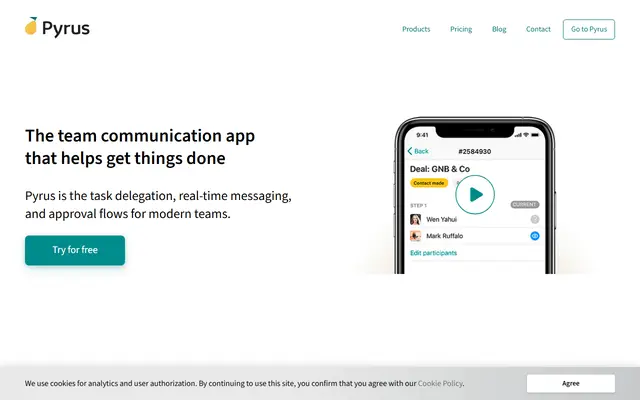 | Pyrus | Regional · Russia | n/a | #314,105 | seen in search |
 | Yandex Tracker | Regional · Russia | n/a | n/a | seen in search |
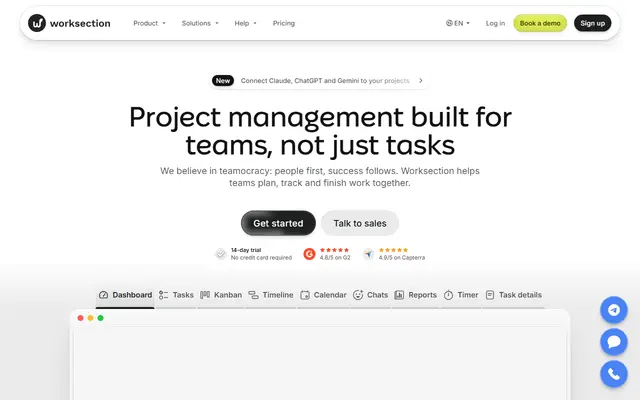 | Worksection | Regional · Ukraine | n/a | #312,141 | seen in search |
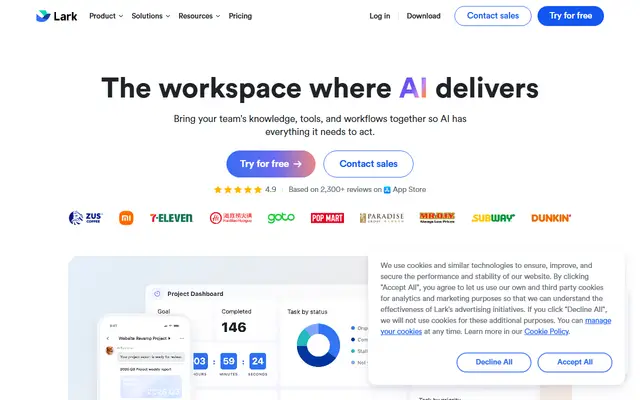 | Lark (Larksuite) | Regional · Asia | n/a | #16,779 | seen in search |
Built-in features of platforms you already use to monday.com (3)
Capabilities that already ship inside a suite or platform you pay for. They rarely match a specialist tool feature for feature, but they cost nothing extra. For monday.com, this list contains 3 entries in this group, including Microsoft Planner, Microsoft Lists and Google Workspace (Sheets/Drive). See all built-in alternatives across every product →
Choosing among built-in alternatives to monday.com
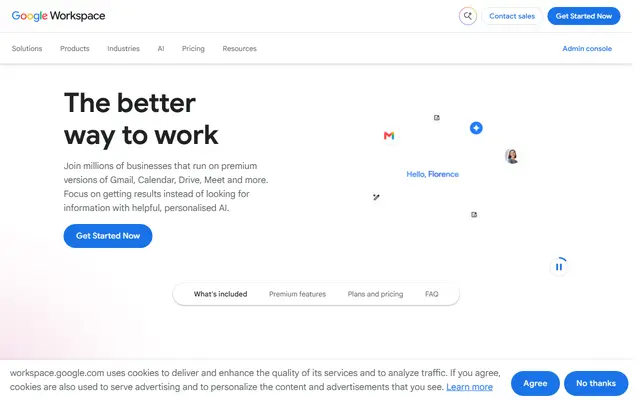
Built-in here means tools that ship inside a platform you may already use. Our data lists three, all seen in search. Microsoft Planner is included in Microsoft 365 and offers kanban. Microsoft Lists is a tracker built on SharePoint. Google Workspace, through Sheets and Drive, is described as having no separate project-management tool.
The appeal is simple: no extra vendor, existing sign-in and data stored where other documents live. The limit is depth: built-in tools rarely match a dedicated platform on automation, dashboards or resource planning. They work well for small teams and straightforward task lists. If you are weighing whether you need a dedicated product at all, begin with what is already licensed, then browse the built-in hub and the SharePoint page for the document-platform side.
Adjacent tools to monday.com (2)
Products that cover part of the job or approach it from another angle. Useful when you only need a slice of the original product. For monday.com, this list contains 2 entries in this group, including Linear and Shortcut. See all adjacent alternatives across every product →
Choosing among adjacent alternatives to monday.com
Adjacent products do not replace monday.com wholesale but take over a specific part of what people use it for. Our data lists two, both seen in search: Linear, a tracker for development, with a Majestic rank of 11,276, and Shortcut, founded in 2014 in the United States, a tracker for product teams. Both focus on software work rather than general business processes.
Choose an adjacent tool when one workflow is what you really needed. If most of your boards are engineering backlogs, a specialised tracker may fit better than a general platform. The risk is splitting work across several tools until nobody sees the full picture, so decide which one owns planning. The adjacent hub collects similar products, and the Jira entry in the enterprise group offers a larger alternative for development teams.

DIY and self-made approaches to monday.com (3)
Spreadsheets, scripts and workflows you assemble yourself. Cheap and flexible for small needs, but they depend on whoever built them. For monday.com, this list contains 3 entries in this group, including Google Sheets as a tracker, Excel as a tracker and Baserow. See all diy alternatives across every product →
Choosing among DIY alternatives to monday.com
DIY means building your own tracker from parts. Our data lists three, all seen in search: Google Sheets as a tracker, which offers shared editing and no dependencies, Excel as a tracker, with spreadsheets and manual management, and Baserow, an open-source table tool based in the Netherlands that is positioned as a replacement for Airtable and sits at Majestic rank 50,355.
This route gives you exact control over fields and views, and it can cost very little if your needs are small. It also makes you the maintainer: the sheet will not remind anyone of anything unless you build that, and permissions and history are only as good as your habits. A sensible compromise is to start with a sheet to learn what you need, then move to a dedicated tool. Read the DIY hub for more, and compare with the managed route on the Zoho page.
Migration checklist: moving away from monday.com
Switching work-management tools is mostly a data-handling exercise, and doing it in order avoids gaps in delivery. Start before you cancel anything. Export everything you can while your current plan is active, and keep it somewhere neutral such as a shared drive. Then rebuild one real project in the new tool and let both run side by side for at least one planning cycle, so you can compare how work is tracked and explain differences before the old subscription ends.
Expect rebuilds, not clean imports. Board structures, column types, automations and dashboards rarely transfer one to one between products, and a table with linked records in one tool may become several lists in another. Budget time for mapping fields, recreating automation and retraining people. Also decide what to do with closed history: some teams archive old projects as files rather than importing them. Given the company news in our data, include your contract and billing dates in the timeline, and check what the vendor currently says about your plan. For other examples of planned moves, see the ClickUp page.
- Export tasks, comments, attachments and board structures as files, and keep a copy outside the tool.
- Record field types, statuses, labels and custom columns so you can map them in the new tool.
- List automations, templates and recurring tasks, and note who owns each.
- Capture guest access, user roles and permissions so you can rebuild them.
- Check integrations with calendar, chat, file storage and development tools.
- Pilot one real project in the new tool before moving others.
- Run old and new tools in parallel for one cycle and log the differences.
- Cancel the old plan only after exports are verified, and diarise the renewal date.
Mistakes to avoid when switching
The most common error is choosing a replacement because one feature looked good in a demo. A tool can have an elegant board view and still lack the reporting your managers use every Monday. Write your must-have jobs down first and test each of them during the trial. Another frequent mistake is assuming a cheaper or free plan will behave like the old one: limits on users, automation and views are exactly where lower plans differ.
Teams also underestimate the human side. Habits, templates and shared vocabulary are built around one interface, and a new one means retraining, which is a cost even when the licence is free. Finally, check availability: our data notes that one regional vendor does not sell new subscriptions in Russia, so confirm you can actually buy before you plan around it. For a product comparison in a neighbouring area, see the SharePoint page.
- Picking by brand recognition instead of by the work your team actually does.
- Skipping the export step and losing task history and attachments.
- Importing every old project instead of archiving closed ones.
- Ignoring plan limits on users, guests, automation and storage.
- Moving everyone at once instead of piloting with one team.
- Planning around a vendor without confirming it sells to your country.
What the public data says about these alternatives
Our data contains 47 alternatives. Of these, 45 were seen in search and 2 are unconfirmed. By type, the largest groups are direct (13) and open-source (11), followed by regional (5), budget (3), enterprise (3), built-in (3), DIY (3), free (2), self-hosted (2) and adjacent (2). The size of the open-source group shows how many teams look for a tool they can run themselves.
monday.com was founded in 2012 and has a Majestic rank of 1,281 and a Tranco rank of 3,213. Several alternatives are more heavily linked: Microsoft at rank 9, Jira's Atlassian domain at 502, Trello at 642, Zoho at 651, Notion at 810, Airtable at 1,048 and Asana at 1,117. At the other end, Kanbanchi sits at 498,131, Planka at 363,457, Huly at 360,055 and Planfix at 376,063.
Where a founding year is known, the oldest is Microsoft at 1975, followed by Zoho in 1996 and Adobe Workfront in 2001. The newest are ClickUp and Notion, both from 2016. Country information is partial: the United States appears many times, Russia three times, and Ireland, Israel, India, Australia, the Netherlands and Ukraine once each, with Asia as a regional label. Treat these as signals about prominence and origin, not as measures of quality. The methodology page explains each source.
Frequently asked questions
What is the best free alternative to monday.com?
Based on our public sources, Notion and Bitrix24 are the two entries classed as free. Notion is noted for documents and databases with a free plan, and Bitrix24 for a free tier with no limit on users. Trello also has a free plan. We do not list limits, so check current terms.
Is there an open-source alternative to monday.com?
Yes, and it is the second-largest group in our data with eleven entries, all seen in search. They include OpenProject, Plane, Taiga, Leantime, Kanboard, Wekan, Focalboard, Vikunja, Huly, Redmine and Planka. They need technical effort for hosting, updates and security.
What is the cheapest alternative to monday.com?
We do not list prices, so we cannot name the cheapest. The budget group has Trello, Zoho Projects and Kanbanchi, and Notion and Bitrix24 offer free plans. Google Sheets and Excel are DIY options. Compare current plans and also check limits on users and features, not only the headline fee.
Which monday.com alternative is closest in features?
Our data describes ClickUp as the closest replacement with more features. Asana, Wrike, Smartsheet and Airtable are other direct options, each with a different structure: tasks and projects, collaboration, spreadsheet logic and linked databases. Match the choice to how your team plans work.
Is monday.com shutting down?
Nothing we found says so. Our data describes it as an independent public company as of November 2026, not closed or renamed. It also notes an announced purchase of a voice AI platform, a share-price fall, an investor lawsuit and a mentioned restructuring plan, with no details found.
Can I export my data from monday.com before switching?
Most work-management tools let you download tasks and boards as files, but formats and limits vary by plan, so confirm what yours allows. We do not verify export features. Export early, keep a copy outside the tool, and run old and new tools in parallel before cancelling.
Which alternatives suit development teams?
Jira is noted for development and flexible processes, Linear is a tracker for development and Shortcut a tracker for product teams. Taiga covers Agile, Kanban and Scrum, and Redmine is a classic issue tracker. Choose by workflow and by whether you want to host the tool yourself.
Are there alternatives for Russian-language teams?
Our data lists Planfix, Pyrus and Yandex Tracker as Russian options, all seen in search, and Kaiten as a self-hosted tool. Worksection is labelled Ukraine, with a note that new subscriptions are not sold in Russia. Check availability and data location before you commit.
Can Microsoft Planner or Google Sheets replace monday.com?
For small teams, possibly. Microsoft Planner is included in Microsoft 365 and offers kanban, and Google Sheets and Excel work as simple trackers. They rarely match a dedicated platform for automation, dashboards and resource planning, so list your must-have jobs before you decide.
Bottom line
monday.com is a heavily linked, flexible platform, and our data describes it as independent and still operating despite the recent news around the company. The reasons to look elsewhere are specific: you want to pay for fewer capabilities, you need a tool you can host yourself, you work in a regional market, or you only need a simple board. Match the type to the reason and the shortlist shrinks quickly.
For most teams the practical path is a short list of three: one direct platform such as ClickUp, Asana or Wrike, one cheaper or free option such as Trello or Notion, and an open-source or built-in baseline to test against. Run them side by side with one real project, compare against your own export, and check current plans on each vendor site. Continue with the ClickUp page or the documents and productivity category to compare further.
More alternatives pages related to monday.com

Where monday.com shows up as an alternative
monday.com appears in the alternatives lists of 6 other products: Zendesk, Freshdesk, ServiceNow, ClickUp, Salesforce, Zoho CRM. Comparing those lists shows which tools keep being recommended across the whole category.
Explore more in Documents, Projects & Productivity
E-signature, proposals, project management, intranets and surveys. Browse the full Documents, Projects & Productivity hub, or jump to a related comparison: Qualtrics, ClickUp, DocuSign.