Alternative investment platforms: 50 options by asset group
Alternative investment platforms are online services that let people put money into assets outside ordinary listed shares and bonds: property, art, wine, private companies, farmland, royalties, precious metals, crypto and loans. This page is a directory of 50 such platforms drawn from public sources reviewed in November 2026. It is general information only, not financial, tax or legal advice, it makes no personal recommendations, and the rules that apply to you depend on the country you live in.
Unlike most pages in this directory, there is no single product being replaced here. The topic itself is the subject, so every entry is classed as adjacent: each takes over one narrow part of what people want from alternatives to conventional investing. That is why the page is organised by asset group rather than by the usual ten types, and why the guide below spends its time on how the groups differ in risk, liquidity and access.
We did not test any platform, we do not state returns, fees, minimums or eligibility, and we do not rank by quality. Of the 50 entries, 12 were seen in search and 38 are unconfirmed in our review. Check each provider's own current terms and your local rules before doing anything. The personal finance category places this page among related topics.
This page lists 50 alternatives to Alternative Investment Platforms, spread across 1 types: adjacent (50).
12 of the 50 entries were seen in live web search results during our November 2026 review; the remaining entries are labelled unconfirmed so you know where extra checking is needed.
- Adjacent: 50 (100%)
12 of 50 entries (24%) were seen in live search results during our review; the rest are labelled “unconfirmed” and should be checked on the vendor site.
What are alternative investment platforms and why do people look for alternatives?
The phrase covers a broad family of online marketplaces and funds that offer exposure to assets other than public shares and bonds. Examples in our data include real estate platforms such as Fundrise and CrowdStreet, art and collectibles platforms such as Masterworks and Rally, equity crowdfunding sites such as Wefunder and StartEngine, farmland platforms such as AcreTrader and FarmTogether, and crypto exchanges such as Coinbase and Kraken. Our data has no domain, founding year or ranking for the topic itself, and no status note, so we describe it by its role: a directory heading, not a product.
People look at more than one platform for several reasons. The first is that each platform usually specialises. A site built around single-family rentals will not offer art, and a crypto exchange does not offer farmland, so anyone exploring several asset groups ends up comparing platforms across groups. The second is access. Many offerings are limited by country, by investor status or by minimum size, and public information about those limits is hard to compare in one place.
A third reason is risk awareness. Alternative assets are often harder to sell quickly, may be priced by appraisal rather than by a live market, and can carry layered fees. Readers who understand this want to see the field before they decide whether any of it fits. A fourth is regulation: the legal framework for crowdfunding, private funds and crypto differs sharply between countries and changes over time.
The sections below explain how we compiled the list, how to think about the groups and what questions to ask. For neighbouring topics, see the pages on alternative investment fund managers and alternative credit scoring, and remember that nothing here is personal advice.
How we built this list
The list was compiled in November 2026 from public sources only: the Majestic Million for domain prominence, the Tranco list, Wikidata for founding years and headquarters, and a review of public web search results. Licences and limits are described on the methodology page.
Each entry has one of two statuses. Seen in search means we found the platform listed or described in public results as an alternative-investment option. Unconfirmed means it appears in our data but we could not match it in that review. Here 12 entries were seen in search and 38 are unconfirmed, which is why we never offer an unconfirmed name as a top pick and why we avoid ranking anything.
Directory types exist because the word alternative hides different trade-offs; on this page all 50 entries fall into one, the adjacent type. To see how other pages use the full set, look at the direct alternatives hub and the free alternatives hub. We do not accept payment for inclusion, and inclusion is not an endorsement.
How to approach choosing an alternative investment platform
We cannot say which platform suits you, because that depends on your finances, goals, tax position and country. What we can offer is a list of neutral questions that readers commonly use when comparing platforms, based on general principles of how these products work. Treat them as a research checklist, and consider speaking with a licensed professional in your jurisdiction before committing money.
Start with who is allowed to use the service. Some platforms accept the general public in certain countries, others only investors who meet formal criteria, and some are not available at all in many places. Then look at what you actually own. An interest in a fund, a share of a special-purpose company, a loan note and a directly held coin are different legal things with different protections if the provider fails.
Next, think about liquidity and time horizon. Many alternative products can be hard to exit before a stated term ends, and secondary markets, where they exist, may be thin. Finally, read how the provider earns money. Fees can be charged at several layers, and public pages do not always show the total. Our guide to adjacent options explains why platforms like these are treated as partial substitutes. These are the questions to weigh:
- Eligibility: check whether your country and investor status are accepted, and what documents are required.
- Ownership: understand exactly what you hold, such as fund units, company shares, loan notes or the asset itself.
- Liquidity: find out whether and how you can sell before maturity, and what happens if nobody buys.
- Fees: look for management, transaction, custody and exit charges, and ask for a full list in writing.
- Regulation: confirm the provider's licences with the official register in your country.
- Concentration: consider how much of your wealth any single asset group would represent.
- Provider risk: ask what protections apply if the platform itself closes or is acquired.
- Taxes: note that treatment differs by country and asset, and seek qualified tax advice.
Where to start reading, by asset group
Because we make no personal recommendations, this section is a reading map, not a set of picks. If you are curious about property, our data groups Fundrise, CrowdStreet, Arrived, RealtyMogul, EquityMultiple, Groundfloor, Streitwise, Roofstock, Landa and Lofty together. For art and collectibles, look at Masterworks, Rally, Collectable, Alt, Otis and Arthena, and for wine at Vinovest and Cult Wines.
Readers interested in private companies will find Republic, Wefunder, StartEngine, Crowdcube, AngelList and Public.com, and those interested in private markets funds can read about Moonfare, iCapital, CAIS, EquityZen and Forge Global. Land and income streams appear as AcreTrader and FarmTogether for farmland and Royalty Exchange and Songvest for royalties.
Crypto exchanges in our data are Coinbase, Kraken, Gemini, Binance and Bitstamp, and the Coinbase page covers one of them in more detail. Metals providers are Goldmoney, BullionVault, APMEX and Kinesis. Income-style and lending platforms include Yieldstreet, Alto IRA, Percent, Worthy, Mintos, Estateguru, Exporo and PeerBerry. Whichever group you read about, the same checklist of eligibility, ownership and liquidity applies.
All 50 alternatives to Alternative Investment Platforms by type
Adjacent tools to Alternative Investment Platforms (50)
Products that cover part of the job or approach it from another angle. Useful when you only need a slice of the original product. For Alternative Investment Platforms, this list contains 50 entries in this group, including Fundrise, CrowdStreet, Arrived, RealtyMogul and EquityMultiple. See all adjacent alternatives across every product →
Choosing among adjacent alternatives to alternative investment platforms
All 50 entries are adjacent: each covers a slice of what a broader alternatives portfolio might involve. Real estate is the largest group with ten names. Fundrise was founded in 2012 in the United States, Groundfloor in 2013 and Roofstock in 2015. CrowdStreet and Arrived were seen in search, while RealtyMogul, EquityMultiple, Streitwise, Landa and Lofty are unconfirmed. Real estate products can differ widely in what they own and how income is paid.
Art, collectibles and wine form eight entries. Masterworks, Rally (founded 2016), Collectable and Alt were seen in search; Otis, Arthena, Vinovest and Cult Wines are unconfirmed. These are typically priced by appraisal or occasional trades, so liquidity deserves extra scrutiny. Equity crowdfunding and private-company access covers six: Public.com (2019), Republic, Wefunder (2011), StartEngine, Crowdcube (2011, United Kingdom) and AngelList. Early-stage investments can lose their full value.
Private markets funds include Moonfare, labelled Europe in our data, iCapital (2013), CAIS, EquityZen (2013) and Forge Global. Farmland has AcreTrader and FarmTogether, and royalties have Royalty Exchange (2011) and Songvest. Crypto exchanges are Coinbase (2012), Kraken (2011), Gemini (2014), Binance (2017, United Arab Emirates) and Bitstamp (2011, United Kingdom). Prices in this group can move sharply.
Precious metals providers are Goldmoney, BullionVault (2005, United Kingdom), APMEX (1999) and Kinesis. Lending and income platforms are Yieldstreet, Alto IRA, Percent, Worthy (2014), Mintos (2015, Latvia), Estateguru (Estonia), Exporo (Germany, 2013) and PeerBerry. Loans carry the risk that a borrower or the platform fails to pay. See the adjacent hub and, for fund-side context, the fund managers page.
| Site | Name | Type | Founded | Majestic rank | Check |
|---|---|---|---|---|---|
 | Fundrise | Adjacent | 2012 | #50,637 | seen in search |
 | CrowdStreet | Adjacent | n/a | #178,225 | seen in search |
 | Arrived | Adjacent | n/a | #235,628 | seen in search |
 | RealtyMogul | Adjacent | n/a | #114,115 | unconfirmed |
 | EquityMultiple | Adjacent | n/a | #325,950 | unconfirmed |
 | Groundfloor | Adjacent | 2013 | #521,460 | unconfirmed |
 | Streitwise | Adjacent | n/a | n/a | unconfirmed |
 | Roofstock | Adjacent | 2015 | #66,840 | unconfirmed |
 | Landa | Adjacent | n/a | n/a | unconfirmed |
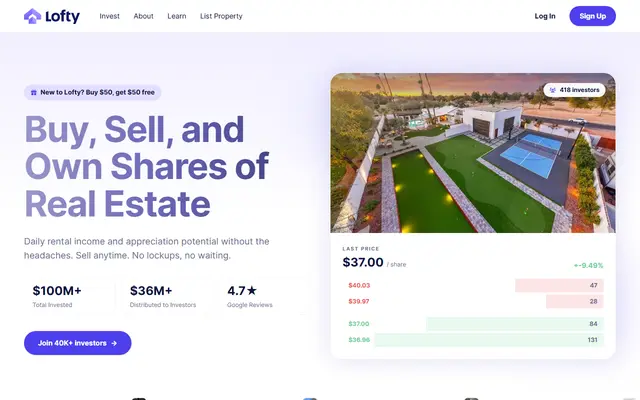 | Lofty | Adjacent | n/a | #289,015 | unconfirmed |
 | Masterworks | Adjacent | n/a | #83,188 | seen in search |
 | Otis | Adjacent | n/a | n/a | unconfirmed |
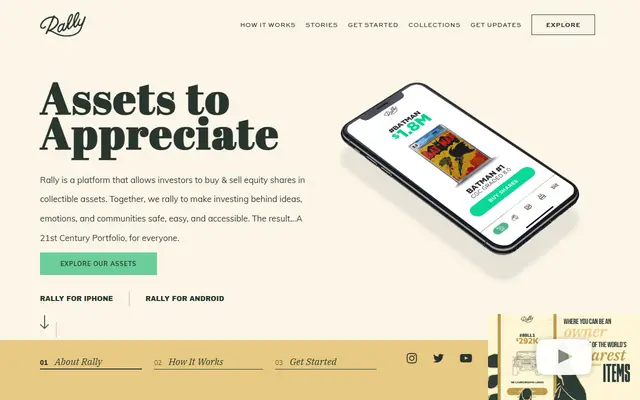 | Rally | Adjacent | 2016 | #331,755 | seen in search |
 | Collectable | Adjacent | n/a | n/a | seen in search |
 | Alt | Adjacent | n/a | #438,609 | seen in search |
| Arthena | Adjacent | n/a | n/a | unconfirmed | |
 | Vinovest | Adjacent | n/a | n/a | unconfirmed |
 | Cult Wines | Adjacent | n/a | n/a | unconfirmed |
 | Public.com | Adjacent | 2019 | #31,973 | seen in search |
| Republic | Adjacent | n/a | #15,563 | unconfirmed | |
| Wefunder | Adjacent | 2011 | #7,575 | unconfirmed | |
| StartEngine | Adjacent | n/a | #35,767 | unconfirmed | |
 | Crowdcube | Adjacent | 2011 | #34,844 | unconfirmed |
 | AngelList | Adjacent | n/a | #42,859 | unconfirmed |
 | Moonfare | Adjacent | n/a | #208,337 | unconfirmed |
 | iCapital | Adjacent | 2013 | #435,529 | unconfirmed |
 | CAIS | Adjacent | n/a | #347,407 | unconfirmed |
 | EquityZen | Adjacent | 2013 | #180,986 | unconfirmed |
| Forge Global | Adjacent | n/a | #70,765 | unconfirmed | |
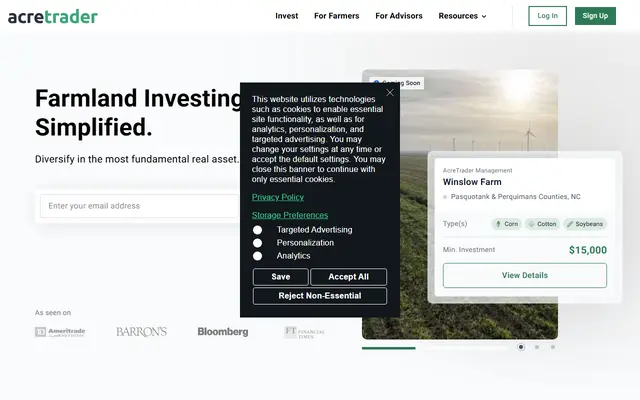 | AcreTrader | Adjacent | n/a | #441,744 | seen in search |
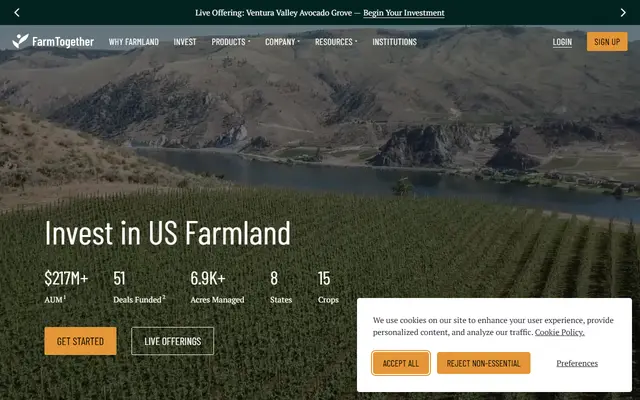 | FarmTogether | Adjacent | n/a | #460,909 | seen in search |
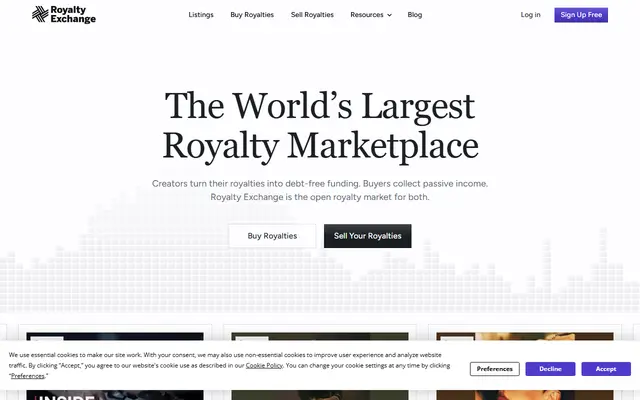 | Royalty Exchange | Adjacent | 2011 | #165,159 | seen in search |
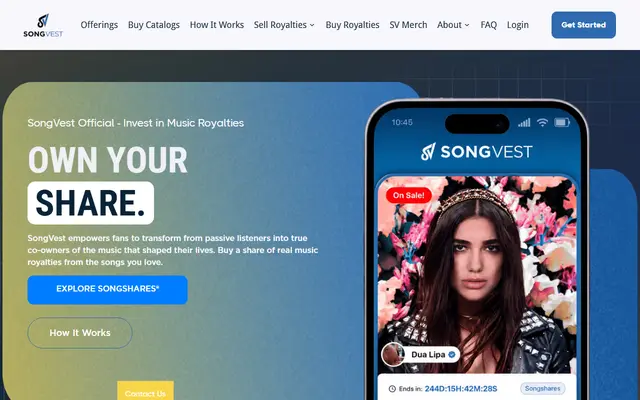 | Songvest | Adjacent | n/a | #965,222 | unconfirmed |
 | Coinbase | Adjacent | 2012 | #1,371 | unconfirmed |
 | Kraken | Adjacent | 2011 | #3,765 | unconfirmed |
 | Gemini | Adjacent | 2014 | #9,469 | unconfirmed |
 | Binance | Adjacent | 2017 | #812 | unconfirmed |
 | Bitstamp | Adjacent | 2011 | #16,119 | unconfirmed |
 | Goldmoney | Adjacent | n/a | #71,343 | unconfirmed |
 | BullionVault | Adjacent | 2005 | #37,500 | unconfirmed |
 | APMEX | Adjacent | 1999 | #31,774 | unconfirmed |
| Kinesis | Adjacent | n/a | #156,340 | unconfirmed | |
 | Yieldstreet | Adjacent | n/a | #147,664 | seen in search |
 | Alto IRA | Adjacent | n/a | #357,911 | unconfirmed |
 | Percent | Adjacent | n/a | #534,440 | unconfirmed |
 | Worthy | Adjacent | 2014 | #191,874 | unconfirmed |
 | Mintos | Adjacent | 2015 | #84,335 | unconfirmed |
| Estateguru | Adjacent | n/a | #321,251 | unconfirmed | |
 | Exporo | Adjacent | 2013 | #242,005 | unconfirmed |
 | PeerBerry | Adjacent | n/a | #578,240 | unconfirmed |
Checklist: moving between platforms or exiting
Moving money or holdings from one platform to another is not like switching a software subscription. Many holdings cannot be moved at all, and exiting may mean waiting for a term to end or finding a buyer. Read the terms before you start, and consider professional advice where large sums or taxes are involved. This is general information only.
Keep your records complete. Platforms may close accounts or change terms, and tax authorities in many countries expect documentation of purchases, income and sales. Start by listing what you hold and where, then work out which items can be sold, which must run to maturity and which can be transferred.
- List every holding with its provider, start date, term and stated exit rules.
- Download statements, tax forms and transaction histories while the account is active.
- Check whether a secondary market or transfer option exists and what it costs.
- Note any lock-up periods, early-exit penalties or notice requirements.
- Confirm how income and capital will be paid out and in which currency.
- Ask the provider in writing what happens to your holdings if the platform closes.
- Review tax consequences of a sale or transfer in your own country.
Common mistakes to avoid
The biggest error is treating an unfamiliar product as if it behaved like a savings account. Alternative assets can lose value, can be difficult to sell, and may depend on a single provider. Another is chasing a headline number without understanding fees, structure and risk. This is general information, not advice.
- Assuming every asset can be sold quickly at its listed price.
- Putting too much of your wealth into one asset group or one provider.
- Ignoring fees that are charged at several layers.
- Skipping the check of licences in your own country.
- Treating inclusion in a directory like this one as an endorsement.
What the public data says about these platforms
Our data contains 50 platforms, all adjacent, with 12 seen in search and 38 unconfirmed. The topic itself has no public rank in our data. Among platforms with ranks, Binance (812), Coinbase (1371), Kraken (3765), Wefunder (7575) and Gemini (9469) are the most prominent domains, while Songvest (965222), Percent (534440) and Groundfloor (521460) sit at the other end.
Founding years run from APMEX in 1999 and BullionVault in 2005 to Public.com in 2019. The United States is the stated headquarters for most entries that carry one, with the United Kingdom, Latvia, Germany and the United Arab Emirates each appearing as well. Treat these figures as signals of prominence and origin, not quality or safety. The methodology page explains each source.
Frequently asked questions
What is an alternative investment platform?
It is an online service offering access to assets outside ordinary listed shares and bonds, such as property, art, private companies, farmland, metals, crypto or loans. Terms, risks and eligibility differ widely. This is general information only.
Which platform is best?
We do not recommend any platform. Suitability depends on your finances, goals and country, and we do not test or rank providers. Use the checklist on this page and consider advice from a licensed professional.
Are these platforms safe?
Safety varies by provider and asset. Alternative assets can lose value or be hard to sell, and platform failure is a separate risk. Check each provider's licences and terms in your own country. This is not financial advice.
Can anyone use them?
Not always. Some services accept the general public in certain countries, while others require investor status or minimum amounts. Rules depend on the country, so check each provider's current requirements.
How do I tell if a platform was confirmed?
We mark entries as seen in search when public results describe them as an alternative-investment option, and unconfirmed when we could not match them. Here 12 were seen in search and 38 are unconfirmed.
Can I take my money out easily?
It depends on the product. Some holdings have fixed terms or thin secondary markets, while others, such as exchange balances, may be easier to move. Read exit rules and fees before you commit.
Are there regional options?
Some entries carry country labels in our data: Crowdcube and Bitstamp from the United Kingdom, Mintos from Latvia, Estateguru from Estonia and Exporo from Germany. Check availability for your country directly.
Do taxes differ by platform?
Tax treatment depends on your country and the type of asset, and we cannot advise on it. Keep complete records and speak to a qualified tax adviser before investing or selling.
Bottom line
Alternative investment platforms are a loose family, and the public data shows 50 names across asset groups from property and art to crypto and lending. They differ greatly in what you own, how easily you can sell and who may use them. A directory can show you the field, but it cannot say what fits you.
A sensible way to use this page is to pick an asset group you want to learn about, read the provider's own terms, and check licences in your country. Treat unconfirmed names with extra care and do not rely on any listing as endorsement. This is general information, not financial, tax or legal advice. Continue with the personal finance category or the Coinbase page.
More alternatives pages related to Alternative Investment Platforms
Explore more in Personal Finance & Investing
Alternatives to traditional student loans, investing platforms and credit scoring. General information only. Browse the full Personal Finance & Investing hub, or jump to a related comparison: Credit Scoring.